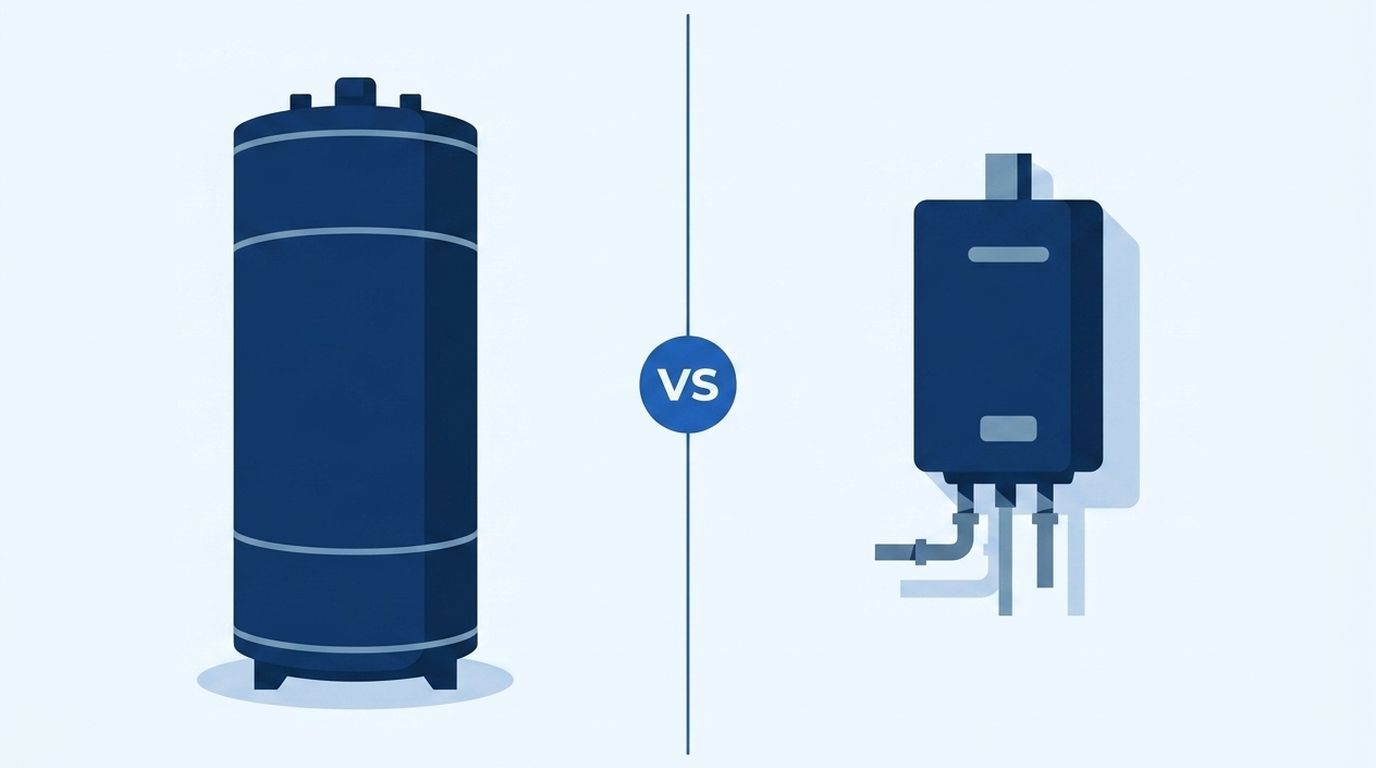

Why Does Your Lakewood Park Water Smell Like Rotten Eggs?
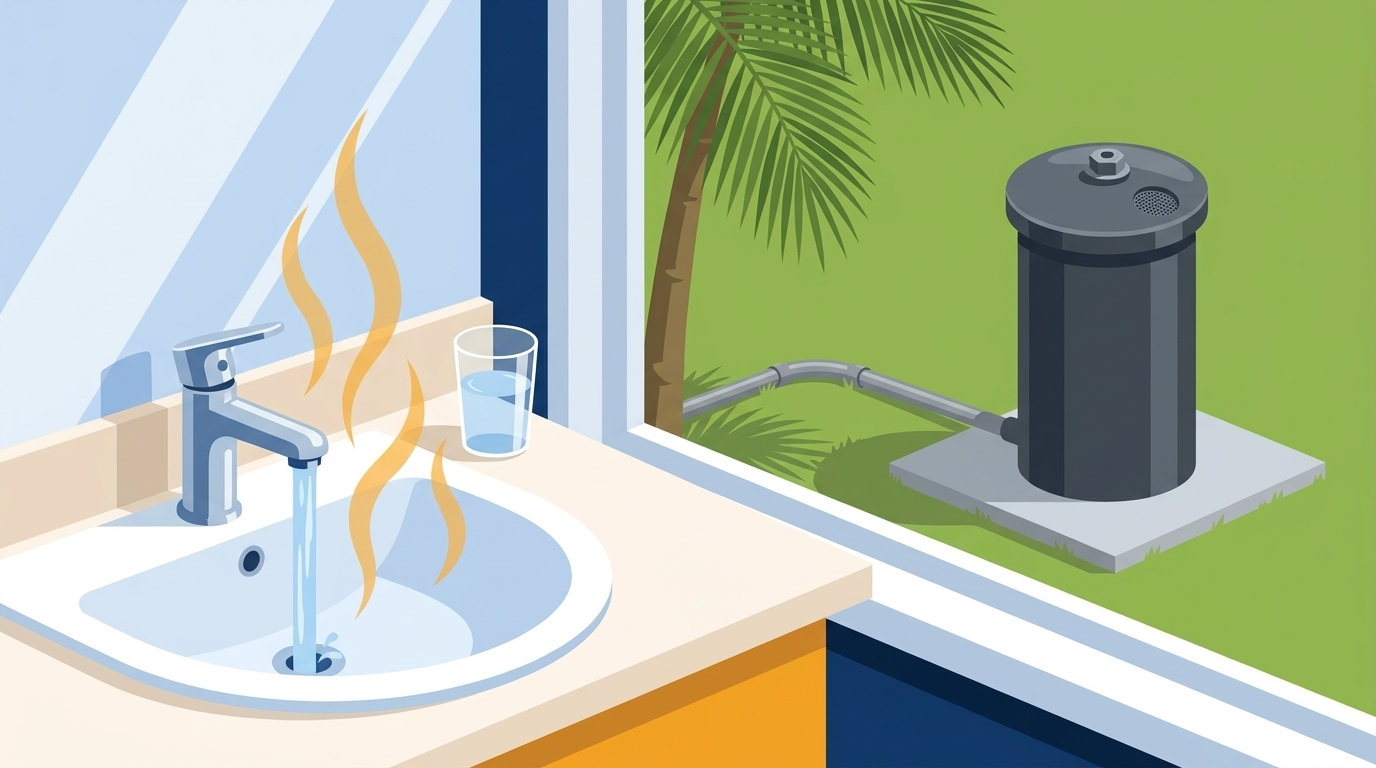
The smell is hydrogen sulfide, a gas dissolved in the water. In a Lakewood Park home it almost always comes from one of three places: the groundwater your well draws, sulfur bacteria in the well or the pipes, or your water heater. Each has its own fix.
If you have not yet ruled out a drain, our guide to a sewer smell in the house covers that first. We do water heater repair and installation and water treatment across St. Lucie County.
What Puts the Sulfur Smell in Lakewood Park Well Water?
Hydrogen sulfide, formed in one of a few places. The Minnesota Department of Health's guide to hydrogen sulfide in well water lists natural decay and chemical reactions with soil and rock, sulfur bacteria in the groundwater, well or plumbing, and bacteria or chemical reactions inside water heaters. Pollution is a fourth source, which the department calls rare.
There is local evidence of odor in the groundwater itself. St. Lucie County Utilities once supplied part of Lakewood Park from its own plant, and its 2024 water quality report for that system says the plant drew from a well in the Surficial Aquifer and treated the water by aeration "to improve taste and odor" before disinfection. The report says the plant went offline on May 1, 2024. The report does not name the odor, and the county's well is not yours.
Most of Lakewood Park was not on that system. In June 2022, with ballots out on a county plan to run water mains through the subdivision, Hometown News reported that most residents still relied on well water and septic tanks. The county's Utilities Projects page gives the result: of the completed ballots received, 40% were for the project and 60% against. As of September 2026 it lists the project as "Currently pursuing funding opportunities to reduce assessment costs." So most homes here still draw from their own wells.
Does the Smell in a Lakewood Park Home Come From the Hot Water, the Cold Water or Both?
Which tap smells points to the likely source. The Minnesota Department of Health's check starts after you have been away from home for a few hours: smell the hot and cold water at the faucets. Its chart, summarized in the table below, then asks whether the cold water smells, whether a tap the softener does not feed smells, and whether the odor fades after a few minutes of running. When only certain faucets smell, University of Georgia Extension's circular on household water odors says the problem is likely in those fixtures or their pipes.
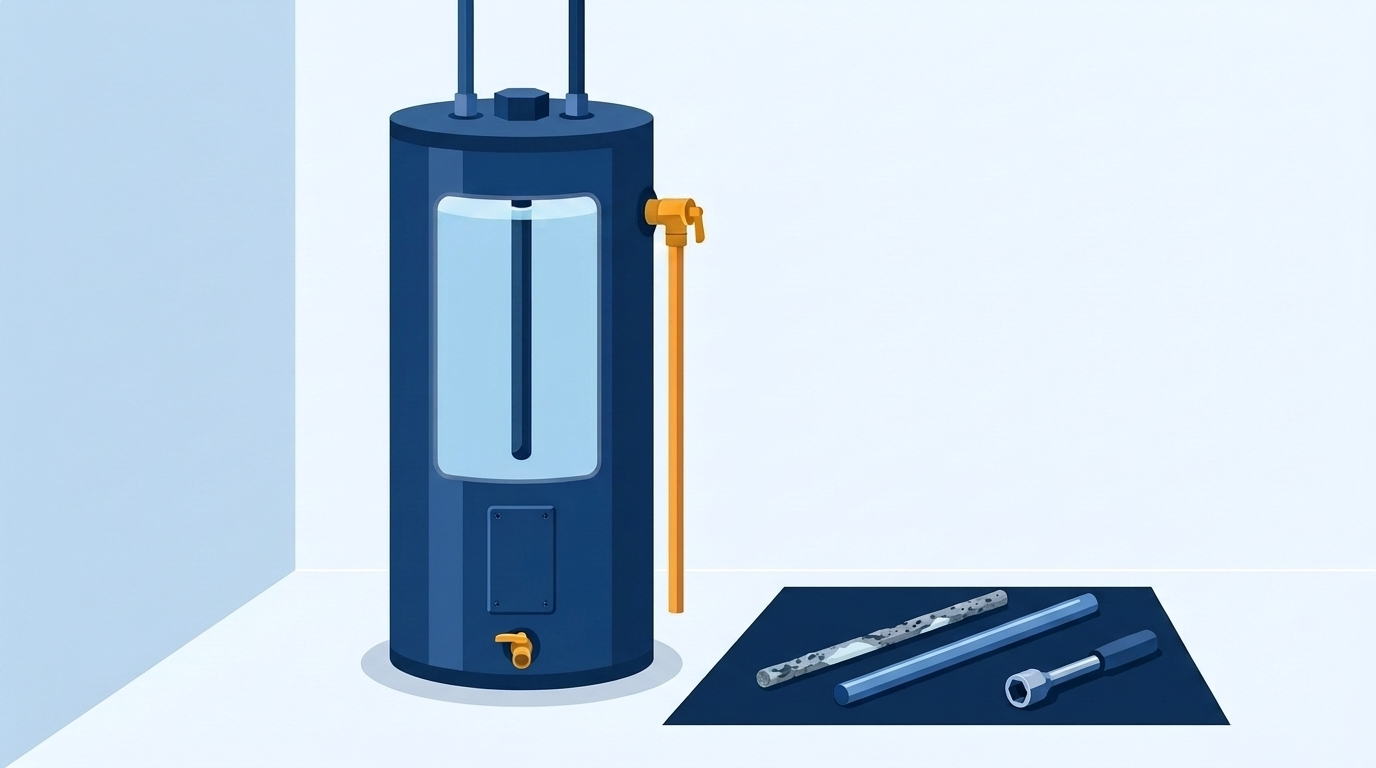
Why only the hot water? A tank water heater can make hydrogen sulfide itself. The Minnesota department describes a warm tank where sulfur bacteria can live, and an anode rod, usually magnesium, that can supply electrons that help turn sulfate into the gas. That is not only a well problem. The Georgia circular, written for public water and private wells alike, says heater bacteria frequently appear when hot water goes unused, the heater is off for a significant period, or its thermostat is set too low. That describes a seasonal home, closed for the summer with the heater off.
| What you notice | Where it likely points | What comes next |
|---|---|---|
| Hot smells, cold does not | The water heater | The anode rod and tank |
| Hot and cold smell at softened taps only | Sulfur bacteria in the softener | Its installer or manufacturer |
| Both smell everywhere, fading after a few minutes of running | Sulfur bacteria in the well or plumbing | Shock chlorination |
| Both smell everywhere, and running changes nothing | Hydrogen sulfide in the groundwater | Whole-house treatment |
| Only certain faucets smell | Those fixtures or their pipes | That fixture's supply |
Will a New Anode Rod Stop the Smell From a Lakewood Park Water Heater?
It can help, and it may not be the whole fix. Rheem's technical bulletin on smelly water calls the odor "a water chemistry condition, rather than a water heater problem." It ranks chlorination first and counts only a continuous chlorine feeder as fully effective. Its second choice, a new lower-activity Rheem anode fitted after a bleach flush, may not be fully effective either, because without continuous chlorination bacteria can still grow in the tank.
The Minnesota department suggests asking a water heater dealer whether a rod of a different material, such as aluminum, can be fitted, since it may protect the tank without contributing to the gas. It also lists removing the rod, but notes that removal may significantly decrease the heater's life.
Removing the old rod is the hard part in several homeowner accounts. In a 2019 video on the YouTube channel Apache Ranch, the factory rod takes a breaker bar to loosen and has to be cut when it hits the ceiling. The Minnesota department's advice is to have a plumber or water system professional do heater fixes unless you are very familiar with water heater operation and maintenance. That is water heater repair we do.
Is It Safe to Drink or Shower in Water That Smells Like Rotten Eggs?
For the gas itself, usually yes, with a caveat about ventilation. What a smell cannot tell you is what else is in the water.
The University of Florida's Florida Well Owner Network says hydrogen sulfide "does not typically pose a health risk to consumers." The National Ground Water Association says to make sure there is adequate ventilation if you can smell the gas, and to get to fresh air quickly if you stop smelling it. At high concentrations the gas can also corrode plumbing metals, according to the University of Florida, and the Minnesota department's signs of the gas include black stains on silverware and fixtures and corrosion on pipes.
The caution is about the well. When the odor traces to the water source rather than a drain or the heater, the Georgia odor circular says not to use the water, because it may contain harmful bacteria. Until a test settles it, that advice stands. The Florida Department of Health strongly recommends testing a private well for bacteria and nitrate at least once per year, names poorly maintained septic systems among the ways both reach wells, and points you to your county health department for sampling instructions. Here, that is the Florida Department of Health in St. Lucie County.
How Do You Shock Chlorinate a Well That Smells of Sulfur in Lakewood Park?
Shock chlorination is a one-time strong dose of chlorine that disinfects the well and its plumbing. It fits the result where both taps smell but fade as the water runs, which likely points to bacteria rather than gas in the groundwater. The Minnesota department adds that established sulfur bacteria can be hard to remove and may need a well contractor's pre-work, such as scrubbing the casing, first, especially if iron bacteria are present too.
The University of Florida's UF/IFAS Extension publication Private Wells 101 lists the steps the Florida Department of Health recommends, and University of Georgia Extension's Circular 858-4 adds safety detail. Before you start:
- Power. UF/IFAS has you turn off power to the pump before the well cap comes off. UGA specifies the pump's circuit breaker, turned back on to circulate the bleach and off again before the cap goes back on.
- Protection. UGA calls for goggles, a protective apron, rubber gloves and boots, and a well-ventilated place to mix. UF/IFAS warns not to mix chlorine with other cleaning products, including ammonia, because toxic gases will form.
- The house. UGA says no one should use the water during the treatment, so arrange drinking water until the step 9 retest shows no bacteria. UF/IFAS says to remove membranes, cartridges and filters from treatment equipment first and replace them after.
- Flush water. UGA's limit is 100 gallons of chlorinated water into a septic system, and none draining to a stream, pond or lake through a drainage ditch.
The steps:
- Pump out at least three well volumes through a faucet near the wellhead, or pump for at least 1 hour if you do not know the well's size.
- Flush all household plumbing, water heater included, until the water runs clear and free of sediment.
- Turn off power to the pump and remove the well cap.
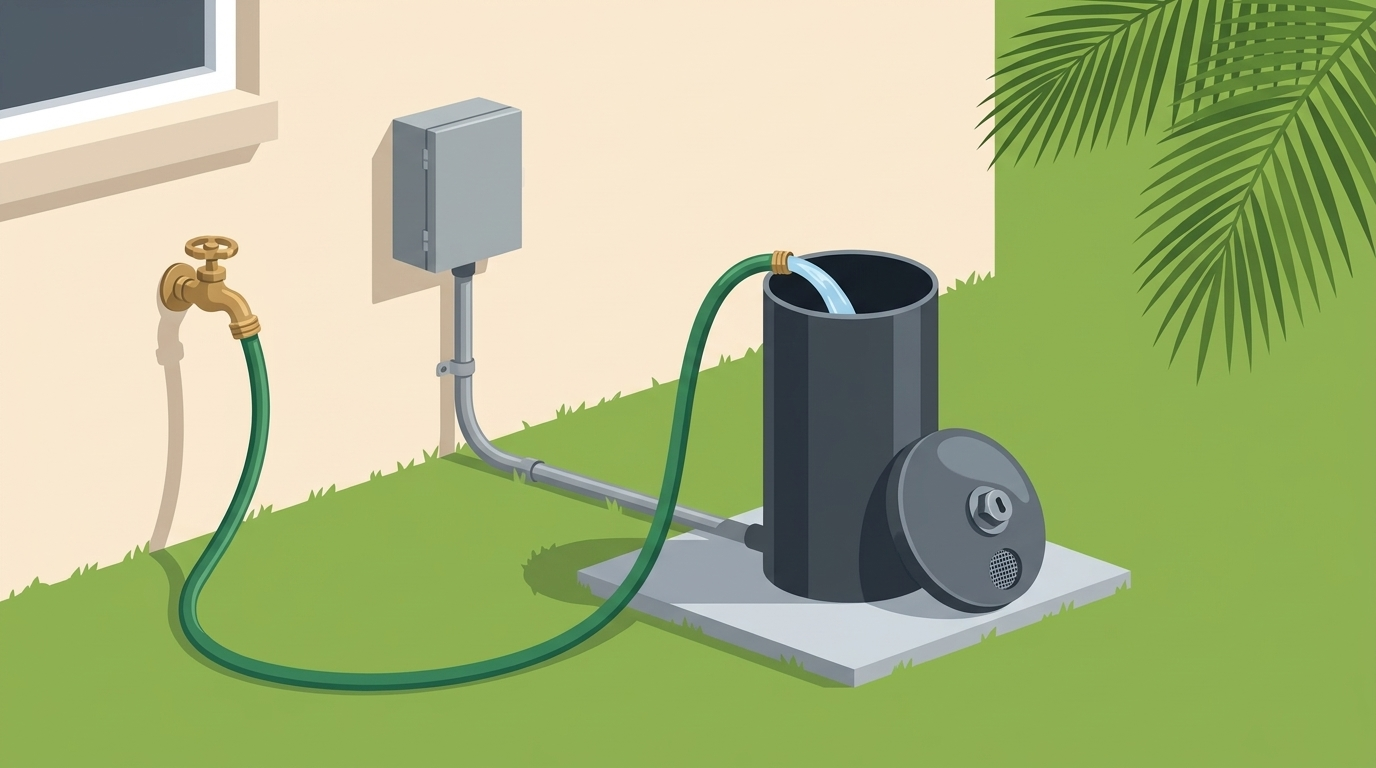
- Dilute regular nonscented household bleach 1 part to 10 parts water and pour it into the top of the well. UF/IFAS says common household bleach is 5% to 6% sodium hypochlorite and splashless bleach is too weak to disinfect a well. The publication's example is 1 cup of bleach in 10 cups of water for a well 2 inches across and 100 feet deep, and its Table 1 covers other sizes.
- With the power back on, connect a hose to a faucet and spray water back into the well for at least 10 minutes.
- Open every faucet until the water smells of chlorine, then close them all and seal the well, breaker off first.
- Let the chlorinated water stand at least 12 hours and no longer than 24.
- The next day, run the pump with all faucets open, starting outside, until the chlorine odor is gone.
- Retest in 5 to 10 days. If bacteria remain, repeat the process, and if the problem persists, contact a water treatment professional. Until the retest shows no bacteria, the University of Florida's Florida Well Owner Network says to use bottled water, or water boiled for at least one minute at a rolling boil, for drinking, cooking and brushing teeth.
When Does a Lakewood Park Home Need Whole-House Sulfur Treatment?
When the gas is in the groundwater, or when the smell keeps coming back. The first is the result where running the water changes nothing, which the Minnesota department reads as likely hydrogen sulfide in the groundwater. Its two answers are home water treatment or a new well in a different formation. For the second, UGA's Circular 858-4 says shock chlorination is not recommended for recurring bacteria problems: a well contractor should find and eliminate the source, or a continuous disinfection system goes in.
The equipment depends on how much gas the water carries. By the Minnesota department's figures, activated carbon filters are effective below 1 milligram per liter and oxidizing media such as manganese greensand up to about 6, while aeration, continuous chlorination and ozonation, each followed by filtration, work below and above 1. So test before you buy. Water treatment is work we do, and whole-house water filtration is the place to start. What a whole-house filtration system costs has its own guide.
A new well is a permit question. The Florida Department of Health in St. Lucie County permits every well in the county, and at the June 2022 town hall, Hometown News reported, county staff cautioned that where county water is available, the Health Department may not permit a new well if the old one fails.
Key Takeaways
The smell is hydrogen sulfide, and where it forms decides the fix. Hot only likely points at the water heater, hot and cold that fades at bacteria in the well or plumbing, and hot and cold that holds at the groundwater.
A new anode may help a hot-only smell, though by Rheem's account it may not be fully effective without continuous chlorination. Shock chlorination treats bacteria, not gas, and carries its own safety steps, including UGA's 100-gallon limit on chlorinated water sent to a septic system and the University of Florida's rule of bottled or boiled drinking water until a retest shows no bacteria. The gas does not typically pose a health risk, by the University of Florida's account, though the National Ground Water Association advises adequate ventilation if you can smell it. The Florida Department of Health strongly recommends testing a private well for bacteria and nitrate at least once per year.
We do water heater repair and installation and water treatment across St. Lucie County, including plumbing service in Fort Pierce.