
What Does a Whole-House Water Filtration System Cost in Port St. Lucie?
Ask five neighbors about Port St. Lucie water and you will hear five complaints: spots on the shower glass, a pool-water taste at the tap, orange stains on the sprinkler side of the house, and on well water, that unmistakable sulfur smell.
Each of those is a different problem with a different fix, and the fastest way to overpay is buying a system before testing the water. Here is what each setup costs installed in 2026 and which complaint it actually solves.
What Does a Whole-House Water Filtration System Cost in Port St. Lucie?
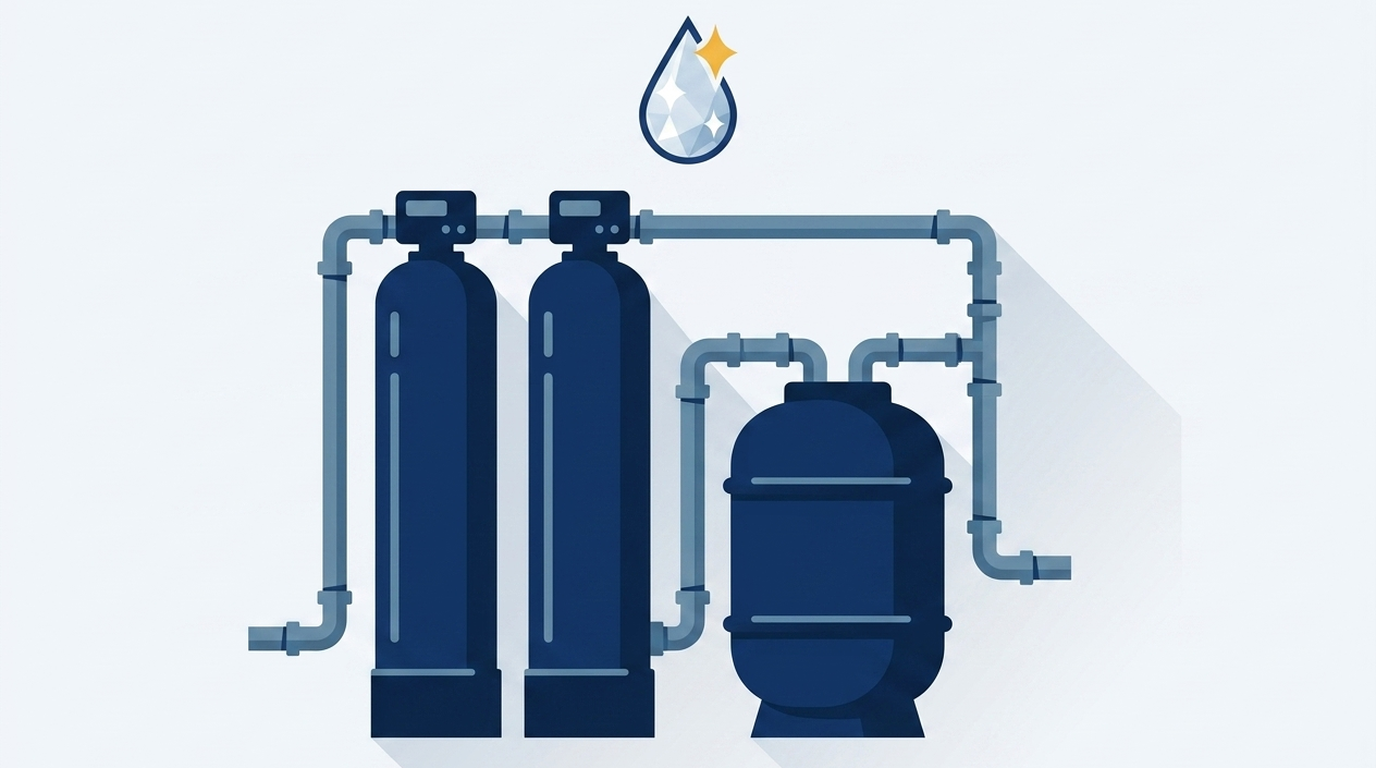
Installed whole-house systems in Port St. Lucie generally run $1,600 to $4,500 depending on what you are treating. A carbon filtration system for chlorine taste and odor sits at the lower end, a softener for hard water lands in the middle, and combined softener-plus-filtration or well-water systems with sulfur treatment reach the top of the range. The right answer starts with what is actually in your water, not with the biggest system on the truck.
| System | Typical installed range | Solves |
|---|---|---|
| Whole-house carbon filtration | $1,600 - $2,800 | Chlorine taste and odor on city water |
| Water softener | $1,900 - $3,200 | Hardness, scale, spotted glass |
| Softener + carbon combo | $2,800 - $4,500 | Both, the most common PSL setup |
| Well water treatment (sulfur/iron) | $2,500 - $5,000+ | Sized to the well test |
What you are treating decides the system
Hard water, nearly everywhere here
Treasure Coast water is hard. It scales up water heaters, spots glass, and shortens appliance life. A softener is the fix, and it is the most common install we do.
Chlorine taste and smell on city water
Port St. Lucie Utilities keeps water safe with chlorination, and a whole-house carbon system is what takes the pool taste out of every tap, not just the kitchen.
Sulfur smell on well water
Homes on wells west of town know the rotten-egg smell. That needs targeted treatment, aeration or oxidizing media, sized to your well test.
Iron staining
Orange stains in showers and around sprinklers point to iron, common on local wells, and it needs its own stage ahead of a softener.
Under-sink vs. whole-house
If you only care about drinking water, a reverse osmosis tap at the kitchen sink costs far less. Whole-house is for protecting the plumbing and every fixture.
Before you buy anything
- Get the water tested first. We test, and city customers can also pull the annual PSL water quality report.
- Check your water heater’s flush water, heavy white scale confirms hardness worth treating.
- Note where symptoms show up: every tap means whole-house, one tap means point-of-use.
- Skip big-box sizing charts, systems are sized to grains of hardness and flow rate, not square footage.
What our installs include
- A water test and a recommendation matched to it, in writing
- Proper bypass valves so service never means shutting the house down
- A drain line and salt setup that meets code
- Settings dialed to your actual hardness, not factory defaults
- Flat pricing with the system, labor, and materials together
The bottom line
Test first, buy second. A $40 test prevents a $4,000 mistake, and the right system for your water is usually smaller than the one a door-to-door pitch wants to sell you.
We test, recommend in writing, and install with proper bypasses so service never shuts the house down.
Frequently asked questions
Is Port St. Lucie tap water safe to drink?
Yes, city water meets federal standards. Filtration here is about taste, smell, scale, and protecting your plumbing, not about safety on city supply. Private wells are a different story and should be tested.
Softener or filter, which do I need?
A softener fixes hardness and scale. Carbon fixes chlorine taste and odor. Many homes here benefit from both, but we will tell you if one is enough.
How long does installation take?
Most whole-house systems go in within half a day, including the bypass and drain work.