
Why Is My Water Heater Leaking?
A puddle under the water heater has a way of showing up at the worst time, right before work or just as guests arrive. The good news is that most leaks come from a small, fixable part, not the tank itself.
The trick is telling the two apart quickly, because a valve drip can wait until morning while a leaking tank is on a countdown. Here is how we sort it out on real service calls across the Treasure Coast, and how you can do the same first pass yourself.
Why Is My Water Heater Leaking?
Most water heater leaks come from one of five places: the drain valve, the temperature-and-pressure (T&P) relief valve, the inlet or outlet connections, condensation, or the tank itself. The first four are usually repairable. A leaking tank almost always means replacement, because the steel has rusted through from the inside.
Common causes of a water heater leak
Loose or failing drain valve
The valve at the bottom used to flush the tank can loosen or wear out. This is one of the cheapest fixes.
T&P relief valve
This safety valve releases water if pressure or temperature climbs too high. If it is dripping, it may just need replacing, or it may be warning you of a real pressure problem.
Loose inlet/outlet connections
The cold-in and hot-out fittings on top can loosen over time and weep. Often a simple tightening or new connector.
Condensation
On a newer unit, especially in humid Florida, water on the outside can just be condensation, not a leak at all.
A rusted-through tank
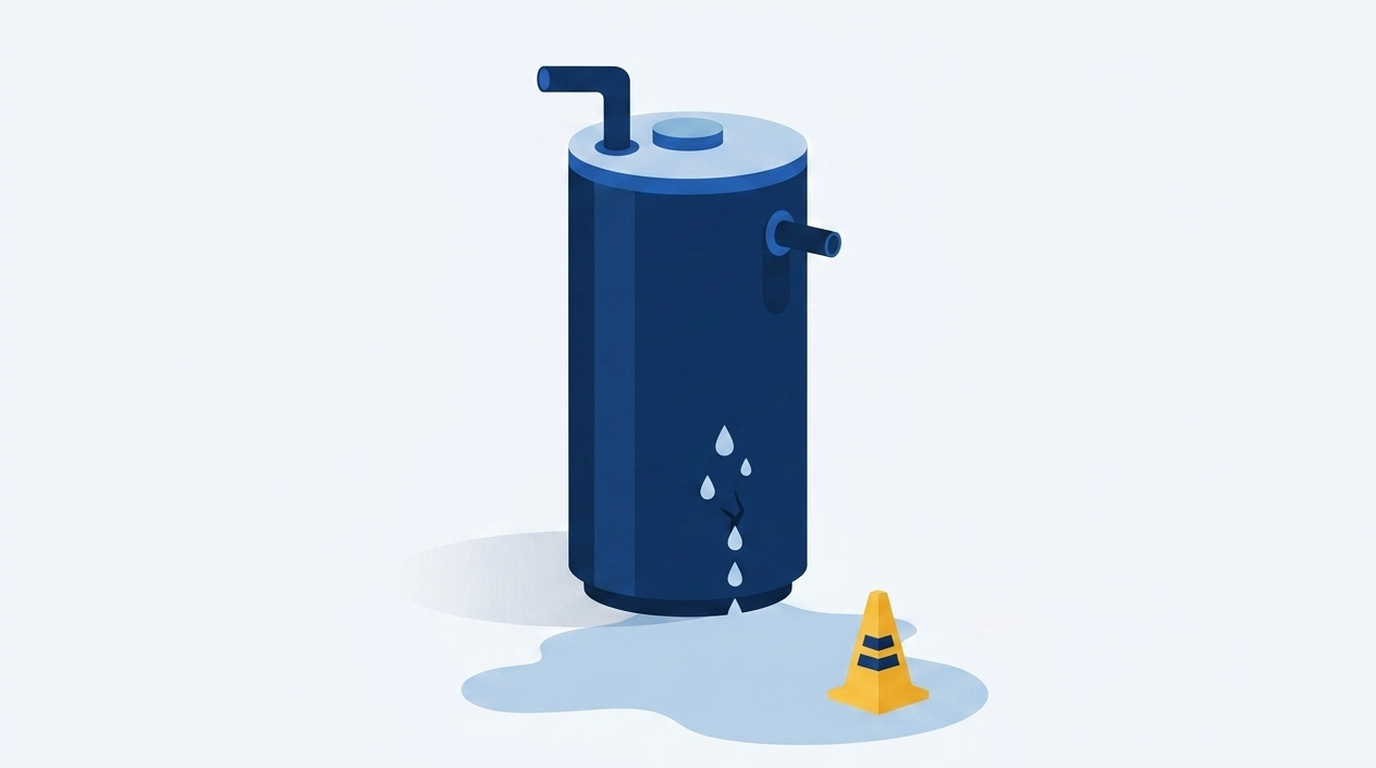
If water is pooling from the bottom of the tank body itself, the tank has corroded. This one is not repairable, it needs to be replaced.
What you can check yourself
- Turn off power (breaker for electric, gas valve for gas) and the water supply if the leak is significant.
- Dry everything, then watch where the water reappears, top, valves, or bottom.
- Feel whether the drain valve or T&P valve is where the water is coming from.
- On a newer unit, wipe it down and see if it is just condensation.
When to call a plumber
- Water is pooling from the base of the tank itself
- The water is rusty or discolored
- The T&P valve keeps releasing water
- The unit is 10+ years old
- You are not sure where the leak is coming from
The bottom line
Find where the water is coming from before you assume the worst. Valves and fittings are cheap fixes, condensation is free, and only a tank leaking from its body means replacement.
If you are not sure which one you are looking at, shut the unit down, snap a photo, and call us. We will tell you over the phone whether it can wait.
Frequently asked questions
Is a leaking water heater an emergency?
A slow drip from a valve usually is not, but a leaking tank can fail suddenly and flood your home. If water is pooling from the tank body, shut off the water and call us.
Can a leaking water heater be repaired?
If the leak is at a valve or connection, yes, often affordably. If the tank itself is leaking, it needs to be replaced, no repair will hold.
How much does it cost to fix a leaking water heater?
A valve or connection fix is one of our more affordable calls. A full replacement costs more but comes with flat, upfront pricing and same-day service.