
Why Does Your Port St. Lucie House Smell Like Sewer?

A sewer smell indoors is a gas path that opened somewhere it should not have. Every drain in your home holds a small plug of water sealing the sewer side off from the room side, and when one of those seals goes you smell what is on the other side.
The first thing to check is also the simplest to fix. The order below is how we work a service call: drain or water first, then the traps, the vents, and the seals at fixtures. Only when all of that comes back clean does it look like a job for sewer line repair in Port St. Lucie, and that is the last item on the list, not the first.
Does the Sewer Smell in Your Port St. Lucie Home Come From a Drain or the Water?
This takes a minute and decides everything that follows. Run a glass of cold water, carry it to another room, and smell it. Then smell the air at the drain. If the glass smells and the room does not, the odor is riding in on the water. If the glass is fine and the drain is not, you have a drain problem.
Two of those rows lead off this page. A rotten egg smell only in hot water is a water heater issue, since the CDC notes hydrogen sulfide "can be formed in hot water heaters, giving tap water a rotten egg odor", so that one is worth having the water heater looked at. Odor in both hot and cold came with the supply, and the answer is treating the water itself.
| What you notice | Where it points | What it means |
|---|---|---|
| Odor at a drain, tap running or not | The drain and vent system | Keep reading |
| Rotten egg odor only in hot water | The water heater | A pro visit, not a drain fix |
| Odor in the water, hot and cold alike | The incoming supply | Treatment, not repair |
Why Do Unused Port St. Lucie Bathrooms Start Smelling Like Sewer Gas?
This is one of the most common causes, and here it has a season.
Under every sink, shower and floor drain sits a curved pipe called a P-trap. The bend holds a small plug of water, and that water is what keeps sewer gas from drifting back up into the room. The water is the seal. Let that water dry out and the trap is just an open pipe to the sewer.
Water evaporates, so a drain nobody uses loses its seal. A trap typically dries out completely after two to four weeks of disuse, according to Oatey, a plumbing products maker, though it varies with humidity, temperature and air circulation.
That explains the local pattern. Homes here sit on slab, so the unused drains are not in a basement. They are the guest bathroom nobody has entered since the holidays, the laundry standpipe behind the washer, and the garage utility sink and floor drain. Add a house closed up while the owners are north for the summer, and several traps have been evaporating in the heat for months. People walk back in during the fall, smell sewer, and assume something broke. Check the traps first.
The fix is water. Pour a cup or two down every drain you cannot remember using, then run water in every fixture monthly. Before a long trip, add a little mineral oil to the refilled trap: it floats on the water and slows evaporation, and unlike cooking oil it will not go rancid and start an odor of its own.
If instead the smell is musty in the room generally, with damp or discoloration, that is a moisture problem. We cover a musty smell in the room rather than at the drain separately.
Why Does a Sewer Smell Come and Go With Rain and Wind in Port St. Lucie?
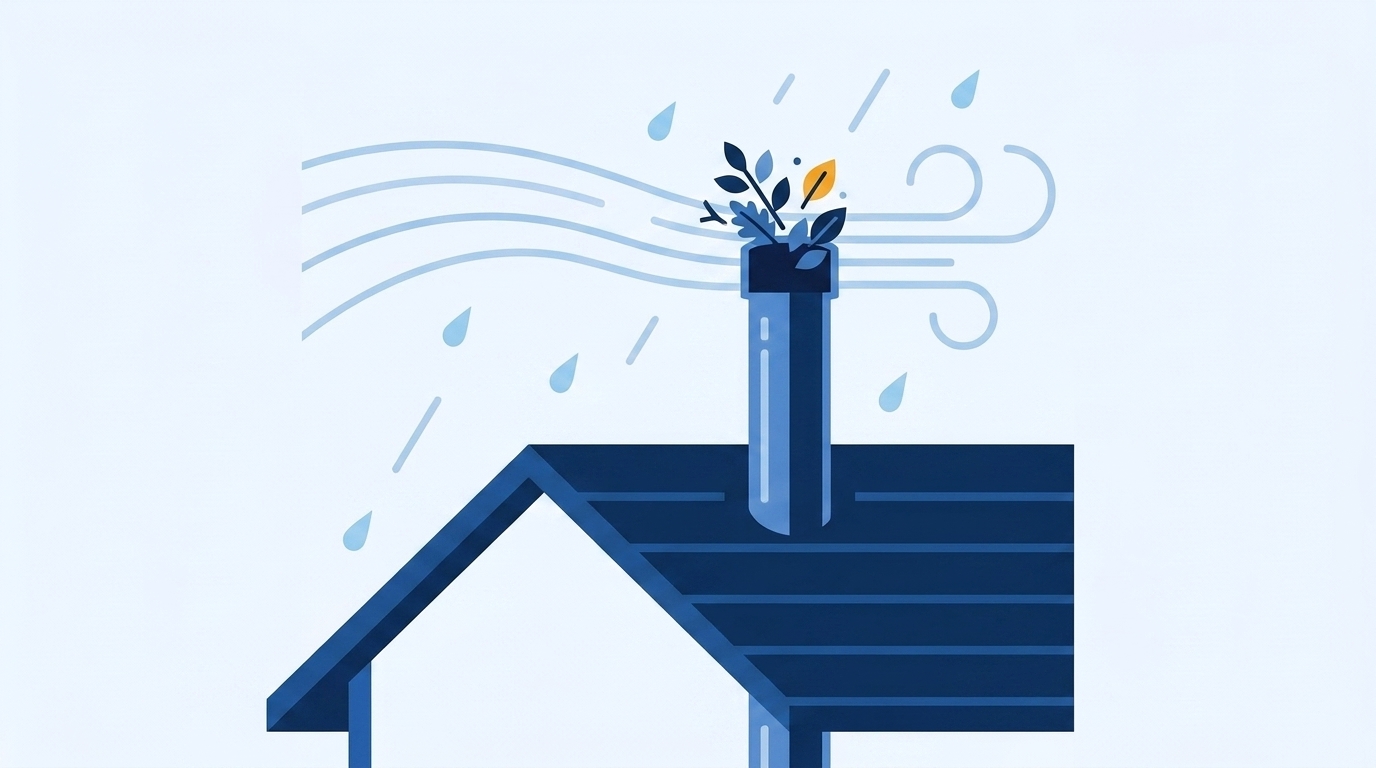
An odor that comes and goes is a clue, not a complication. Your drains vent through pipes running up and out of the roof, letting air in behind draining water and releasing gas above the house. The smell can come and go with wind direction across the roof vents, changes in atmospheric pressure, water usage patterns and how the air handler runs. An intermittent odor often points at a partially blocked vent, a marginally dry trap, or a small leak that only releases under certain conditions. A steady odor typically points to a more serious problem.
Our summer supplies those conditions almost daily. Afternoon storms bring pressure swings and gusts across the roof, then move off. If a vent is partly obstructed by leaves or a nest, that is the window when it gives way, which is why the smell tracks the weather instead of your plumbing. Listen for gurgling too: a drain that glugs as it empties is pulling air from somewhere other than the vent. That does not mean the line is damaged. It means the venting deserves a look.
Where Do Wax Rings, Standpipes and Cleanouts Leak Sewer Gas Into a Port St. Lucie Home?
If every trap is full and the smell persists, gas may be bypassing the traps at a fixture.
At the base of a toilet. A toilet seals to the floor pipe with a wax ring, and a bad installation can break that seal: a flange set below the finished floor means the wax cannot create proper compression, and wax compressed too much on one side leaves just enough room for sewer gas to escape around it. The signs are a smell strongest at the toilet base, dampness on the floor, or a toilet that rocks when you sit. The repair means pulling the fixture, so resetting the toilet and replacing the seal is not a DIY afternoon.
Behind the washing machine. The washer drains into a vertical standpipe, which should have its own trap. Sometimes it does not, and sometimes it is too shallow to hold a seal. A laundry room that smells while every other room is fine points here.
At the cleanout. Cleanouts are capped access points into the drain line, and in warm climates some sit outside at ground level. A cap knocked loose by a mower or never replaced after a service call is an open pipe into the sewer. If the odor is strongest outdoors, walk the perimeter first.
Why Does a Drain in a Port St. Lucie Home Smell Even With Water in the Trap?
Sometimes the trap has water and the drain still smells. That points at something other than sewer gas.
Drains grow a soft bacterial film on their inside walls, fed by soap, toothpaste, hair and grease. The sink overflow, the small opening near the rim of the basin, can trap food particles, mold, soap scum and debris over time, and it often becomes a breeding ground for bacteria. That buildup makes its own odor, and it sits on the room side of the trap, so a good water seal does nothing about it.
The tell runs on timing, not on what the smell is like. If the odor appears or strengthens when you run water into the drain, that is the fixture rather than the sewer: water moving down the pipe pushes air past the buildup and out through the overflow. If it comes instead from a drain nobody has touched in weeks, and running water makes it fade, that is the trap, and you are back in the section above.
Timing rather than odor, because sewer gas is sometimes described as musty or swampy rather than purely like rotten eggs. Sorting this by smell alone will mislead you.
To clear it, scrub the drain walls and the overflow opening with a bottle brush, then flush with hot water. If that drain also runs slow, or the same drain backs up again and again, the buildup is not the whole story.

Which Sewer Gas Smells Mean You Should Leave the House?
A sewer odor you can smell is not automatically dangerous, and we would rather not talk anyone into an emergency they do not have. There is still a line worth knowing.
The rotten egg component is hydrogen sulfide, which the CDC describes as a flammable, colorless gas that smells like rotten eggs. People detect it at very low concentrations, so smelling it does not by itself mean the level is high. The other end is what matters: the CDC notes that at high concentrations "a person might lose their ability to smell it," so someone "might falsely think that hydrogen sulfide is no longer present." A strong odor that stops without anyone fixing anything is not automatically good news. The effects listed at real exposure levels are eye, nose and throat irritation, headaches, tiredness, difficulty breathing for people with asthma, and problems with memory or balance.
So: leave and call from outside if the odor is overpowering, if anyone develops those symptoms, or if a strong smell drops away sharply while sewage is backing up. That last one is not the weather pattern above: it is one strong smell that vanishes fast during a backup.
A different hazard entirely: if what you smell is the sulfur odor added to natural gas rather than sewage, do not investigate. Leave immediately, touch no switches, do not go looking for a gas valve, and call 911 and your gas utility from outside.
When Does a Lingering Smell Point to a Broken Sewer Line Under a Port St. Lucie Home?
Work the list first: this is the least likely answer.
The escalation rule is about persistence and spread. If you have refilled every trap, checked the base of each toilet, walked the outside for an open cleanout, and the smell is still in more than one room days later, the problem sits upstream of the fixtures. That points at the drain line itself.
Slab construction changes how this shows up here. There is no crawl space under a Port St. Lucie home for gas from a cracked pipe to vent away into. The line runs under the slab, so a break pushes gas up through the ground into the living space, and it can surface a room or two from the actual damage. That is the pattern of a smell in several rooms that attaches to no one fixture.
Nobody should dig on a guess. A camera inspection puts a lens inside the pipe and can identify root intrusion, pipe deterioration and developing blockages before they cause backups. It shows whether the line is damaged, where, and how far along. If it confirms a break, we cover what that work runs on the Treasure Coast separately.
One split to know first: you are responsible for the drain plumbing inside and under your home, and your utility handles the public system it connects to. Port St. Lucie Utility Systems asks residents to call 772-873-6400 for a maintenance emergency or a sewer alarm at your home or a neighbor's. If your water and sewer bill comes from the St. Lucie West Services District instead, its number is 772-340-0220. Either way, an odor strongest outdoors or seemingly off the street is theirs rather than yours. Homes on a private system rather than city sewer follow a different path again.
Key Takeaways
Start with the traps, because a drain that dried out is one of the most common causes. You can sort the question in about a minute by smelling a glass of cold water against the air at the drain: hot water only means the heater, both means the supply.
Guest baths, laundry standpipes and garage floor drains dry first, and a house closed for the summer comes home with several traps empty. If the trap is full and the odor arrives when you run water, that is buildup in the fixture rather than sewer gas. Leave and call from outside if the odor is overpowering, if anyone develops symptoms, or if a strong smell drops away suddenly while sewage is backing up.
We handle drains and sewer lines across the Treasure Coast, from Port St. Lucie up in Jensen Beach and through Martin County. If you have run this list and the smell persists, have someone look.