
How Long Does a Well Pump Last in Palm City, FL?
A well pump on the Treasure Coast usually gives you between 8 and 15 years, and the spread matters more than the average. Two identical pumps installed the same week can reach the end of their lives years apart, and what separates them is almost never the brand on the housing. It is the water they move, how often they start, and whether the pressure tank beside them was pulling its weight.
That is worth knowing before anyone recommends a new pump, because the part that fails first is often not the part that gets replaced. If your pump is behaving badly, our well pump service in Palm City starts by testing the whole system rather than condemning the motor on symptoms alone.
Does a Submersible or Jet Pump Last Longer on a Palm City Well?
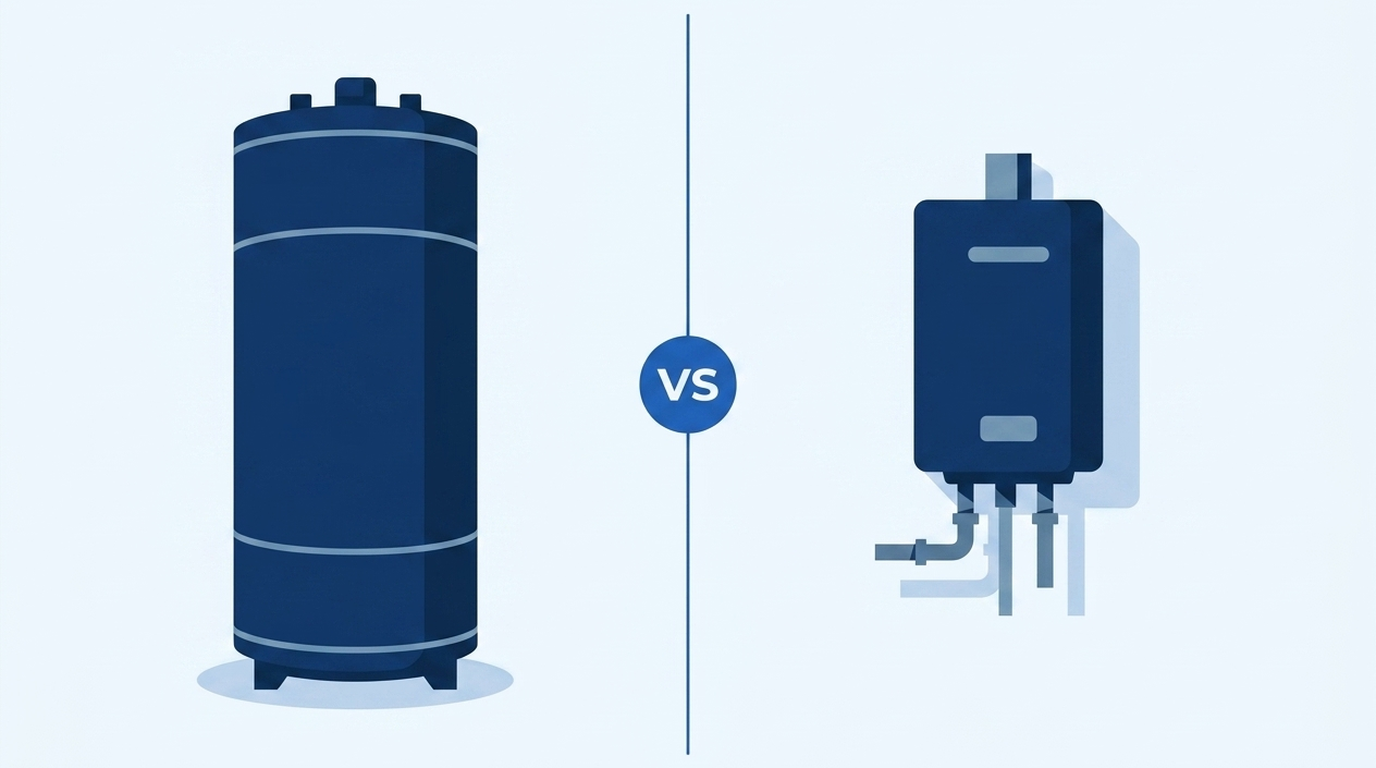
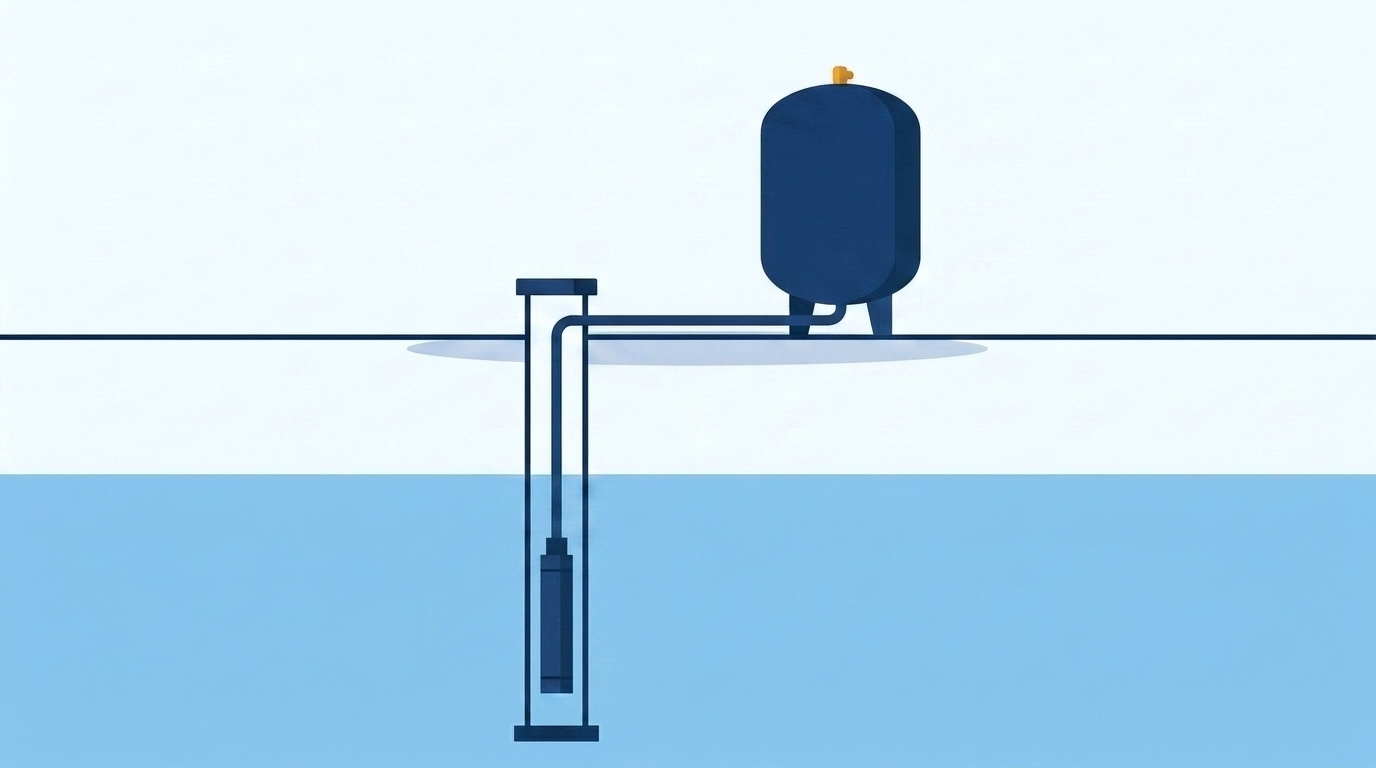
Submersibles last longer, and the reason is physics rather than quality. A submersible sits down in the water column, and the water around it carries heat away from the motor continuously. A jet pump sits above ground and has to pull water up to itself, so it works against lift on every cycle and cools itself far less efficiently. More work, less cooling, shorter life.
In practice a submersible runs 8 to 15 years, and a well maintained one in clean water with correct sizing and decent electrical protection can push past 20. A jet pump more often lands between 7 and 12. The observed spread on jet pumps is wide, with documented service lives running from about 4 years to 15 or 20, which tells you how much conditions matter and how little the calendar does.
Knowing which one you have takes a minute. If no pump is visible and the wellhead is just a capped pipe, yours is a submersible hanging down the casing. If a motor sits above ground near the pressure tank, that is a jet pump. Shallow wells tend to get jet pumps and deeper wells need submersibles, so the choice follows depth.
What Shortens Well Pump Lifespan in Palm City's Iron-Heavy Water?
Water quality does more damage to a pump than age does, and here that mostly means iron and sediment. Iron is common in local groundwater, and the EPA sets a secondary standard for iron at 0.3 mg/L, describing its effects as "rusty color; sediment; metallic taste; reddish or orange staining." Those standards cover taste and appearance rather than enforceable health limits, but they are a fair guide to how hard your water works on your equipment.
Sediment is the part that takes years off the pump. Fine sand and grit are abrasive, and they wear impellers the way sandpaper wears wood. The gap is not subtle: a submersible in low-sediment water can reach 15 years, while the same pump in high-sediment water without adequate sediment and check valve protection can fail in 5 or 6. That is the biggest single lever on the number.
Three other things shorten the run. An oversized pump reaches cut-out too quickly and lives in short bursts. Unstable voltage punishes unprotected motors in storm season. And a pump set too low draws up settled sediment, feeding itself the thing that wears it out.
If orange staining in showers or around sprinklers sounds familiar, the water side is a separate job. Our whole-house water treatment options address the iron itself, and we have written up what filtration costs on the Treasure Coast if you want to weigh the choices first.
Why Does Short Cycling Make a Well Pump Fail Early in Palm City Homes?
Short cycling means the pump switches on and off rapidly instead of running in sustained stretches. Starting is the hardest thing an electric motor ever does. Inrush current at startup is a multiple of running current, and the heat that comes with it degrades windings over time. Run hours are not what kills pumps. Start counts are.
There is a local wrinkle worth understanding. Your pressure switch does not read the pipe directly. It senses pressure through a small port, and that port is narrow enough to block. Iron, sediment, and mineral scale can pack a sensing port or tube, and a partly blocked port sees pressure changes late and erratically, so the switch chatters. The pump then starts and stops on readings that do not reflect what is happening in the line.
We want to be precise about what that proves. Nobody has measured how often this happens on Palm City wells versus anywhere else. What is fair to say is that the fouling agents are iron and sediment, both well documented in local groundwater. If your pump chatters and your water carries iron, inspect the switch before blaming the pump.
Why Does a Waterlogged Pressure Tank Look Like a Failing Pump?
A pressure tank is not a storage barrel. It holds a cushion of compressed air separated from the water by a rubber bladder or diaphragm, and that cushion is what lets you draw water without the pump running. Open a tap and the air expands, pushing water out. The pump only wakes when pressure falls to cut-in.
When the bladder ruptures, water floods the space the air used to occupy. The tank becomes effectively solid water with almost no cushion left, so the smallest draw collapses pressure instantly and the pump starts. Close the tap and pressure spikes back to cut-out, so the pump stops. That is a waterlogged tank, and it produces a pump switching on and off constantly, exactly what a dying pump looks like from the kitchen.
This is why the order of diagnosis matters. A tank that has quietly failed will drive a good pump into the ground, and if the pump is replaced without anyone testing the tank, the new one inherits the same punishment. Tanks run their own clock: a quality tank lasts about 10 to 15 years under normal conditions and the best reach 15 to 20.

Which Well Pump Warning Signs Should a Palm City Homeowner Never Wait Out?
Not every symptom is an emergency. Sort them by how fast they need attention.
Call the same day for these. No water at all. A pump that runs continuously and never shuts off, because a motor that cannot reach cut-out is cooking itself. A breaker that trips repeatedly, which is an electrical fault, not an inconvenience. Sand or grit at the taps, which means the intake is drawing from the bottom and every minute of running does more damage.
Get these looked at this week. Pressure that swings noticeably while a shower runs. A pump cycling every minute or two under light use. Air sputtering at fixtures. Each is a system degrading rather than one that has failed, so the window to fix the underlying cause is still open.
One case deserves its own note. If the pump starts when nobody is using water, that is not the pump misbehaving. Something downstream is losing water, or a check valve is not holding, so walk through the signs of a hidden water leak first. And remember that a private well is yours to look after: the EPA is explicit that private well owners "are responsible for delivering safe drinking water to their households," and the Florida Department of Health recommends testing for bacteria and nitrate at least once a year.
How Do You Check the Pressure Tank Before Replacing a Well Pump in Palm City?
There is a check you can do yourself with a tire gauge. Do it before anyone talks about a new pump.
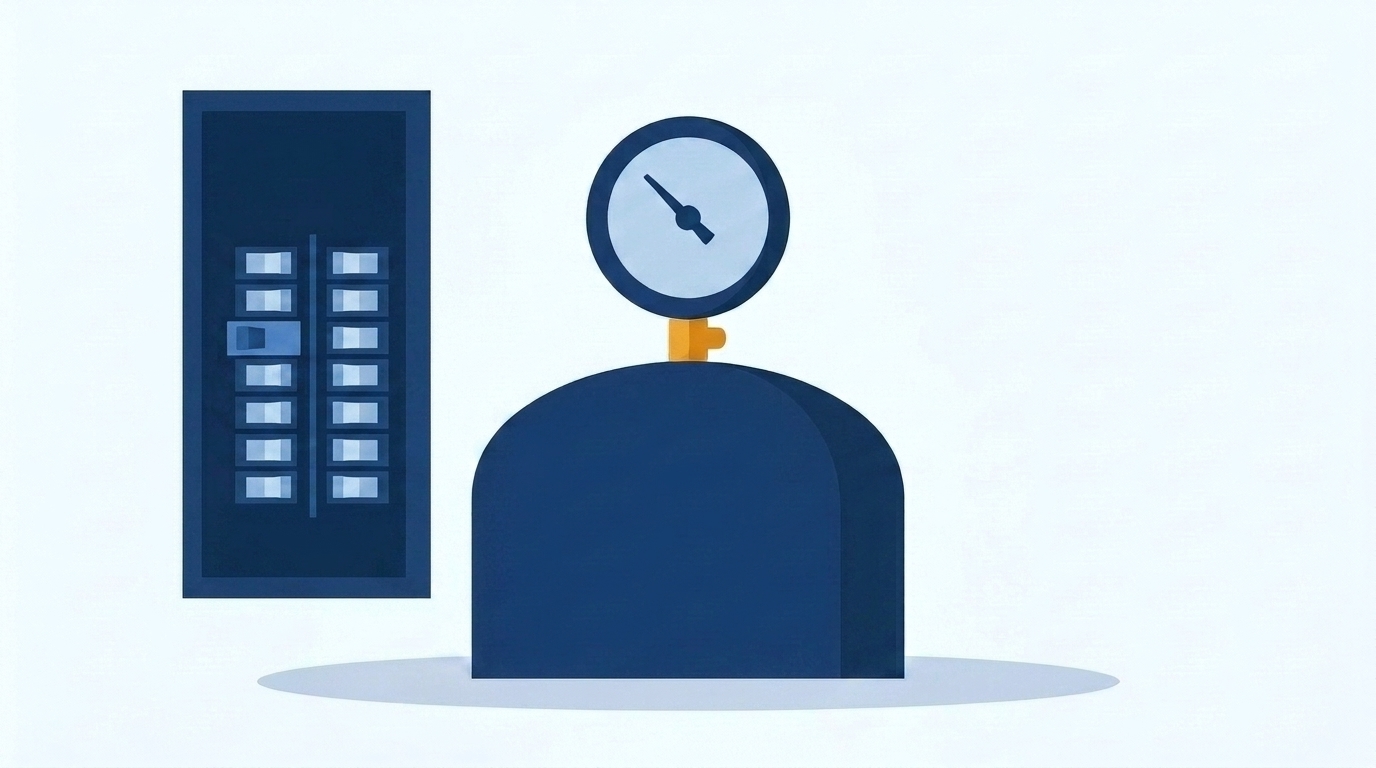
Switch off the breaker feeding the pump. Open a faucet and let the system drain until pressure reads zero and the water stops. This is not optional, because a reading taken with pressure still in the tank tells you nothing. With the system empty, find the Schrader valve on top of the tank. It looks exactly like the valve on a car tire, because it is one.
Put the gauge on it and read the air pressure. It should sit 2 psi below your cut-in pressure, so about 28 psi on a 30/50 system and about 38 on a 40/60. If the reading is far below that, the tank has lost its charge and the pump has been cycling harder than it should. If water sprays out of the valve instead of air, the bladder has ruptured and the tank is waterlogged. That is a definitive answer, and you got it without pulling anything out of the ground.
There is a rougher version if you have no gauge, but it only works at normal working pressure, so restore power and let the system refill to cut-out first. Then knock along the side of the tank. A healthy one sounds hollow near the top and solid toward the bottom where the water sits. A tank that sounds solid all the way up has no cushion left. Do this on a drained tank and it tells you nothing, because the bladder expands to fill the shell once the water is out. Check the charge once a year and you will catch a weakening bladder long before it takes the pump with it.
When Does Replacing a Well Pump Beat One More Repair on a Palm City Well?
Age against the range is the first test. A submersible in year 12 that has already needed attention is a different proposition from the same fault in year 4. Deep into its expected life, each repair buys a shorter extension.
Access is the second test, and it decides most submersible cases. Pulling a submersible is the substantial part of the job, so if it is already out of the well and near the end of its range, replacing it while it is up is usually the better call. Putting an aging pump back down the casing risks repeating the whole operation soon. Jet pumps sit above ground and are easier to reach, so repair stays reasonable for longer.
Repeat failures point at a cause rather than a component. A pump that fails twice in a season is telling you something upstream is wrong, and a third pump will not answer it. Sand in the water points at the well or the setting depth. Chronic cycling points at the tank or the switch. A motor that keeps burning out points at sizing or supply. In our own experience across the wells we look after in Indiantown and the western communities, sediment and iron do most of the damage.
The one clear replace signal is a pump that was wrong for the well to begin with. An oversized pump will short cycle no matter how many switches and tanks you put on it, because the mismatch is between the pump and the well.
The Bottom Line on Well Pump Lifespan in Palm City
Plan on 8 to 15 years for a submersible and 7 to 12 for a jet pump, then adjust for your own water. Sediment and iron move that number, and they can cut a 15 year pump down to 5 or 6. Short cycling is the other accelerant, and it usually traces back to a pressure tank that has lost its air charge or a sensing port that has silted up, neither of which is the pump's fault.
So before you replace anything, check the tank. Kill the breaker, drain the pressure, put a gauge on the Schrader valve, and see whether the cushion is still there. That one reading separates a pump at the end of its life from a pump being punished by the part beside it.