
Does Your Florida Home Have Polybutylene Pipes?
Your Florida home could have polybutylene pipes if its water lines went in between the 1970s and the mid-1990s, the years polybutylene was used in U.S. and Canadian plumbing. Whether it does comes down to a look at the pipe itself, and a plumber or a home inspector can confirm what you find.
That question reaches a lot of houses: about a third of Port St. Lucie's homes were built between 1980 and 1999, according to the U.S. Census Bureau's American Community Survey estimates for 2020 to 2024. That is a count of build years, not of polybutylene.
It matters for insurance as much as for plumbing. Under Citizens Property Insurance Corporation's rule, as clarified for its agents in April 2022, a home over 20 years old with polybutylene piping is not insurable by Citizens as new business. Below are the years to check, where to look, why the pipe can fail from the inside, what that rule covers and why, under its wording, replacing only part of the pipe may not be enough.
How Old Does a Home Have to Be to Have Polybutylene Pipes in Port St. Lucie?
Old enough that its water lines went in before the mid-1990s. Polybutylene piping came into North America in the 1970s and was used in U.S. and Canadian plumbing until the mid-1990s, according to the Plastics Pipe Institute, an industry group whose members include plastic pipe makers. Lawsuits and class-action settlements led the resin makers to stop supplying pipe-grade polybutylene to North America.
Build year is your first filter. Most of the 1980 to 1999 span in the Census figure above falls inside the polybutylene years, so much of that third of Port St. Lucie's homes is old enough to be worth checking. Not all of it, though: the span runs a few years past the mid-1990s, and any of those homes may have been repiped since. So build year tells you which homes are worth a look, not which ones have polybutylene.
For example, a house built in the late 1980s falls inside those years, so it could have polybutylene. Whether it does depends on what is behind its walls today. A build year only says could; a look at the pipe says does.
Where Do You Look for Polybutylene Pipe in a Port St. Lucie Home?
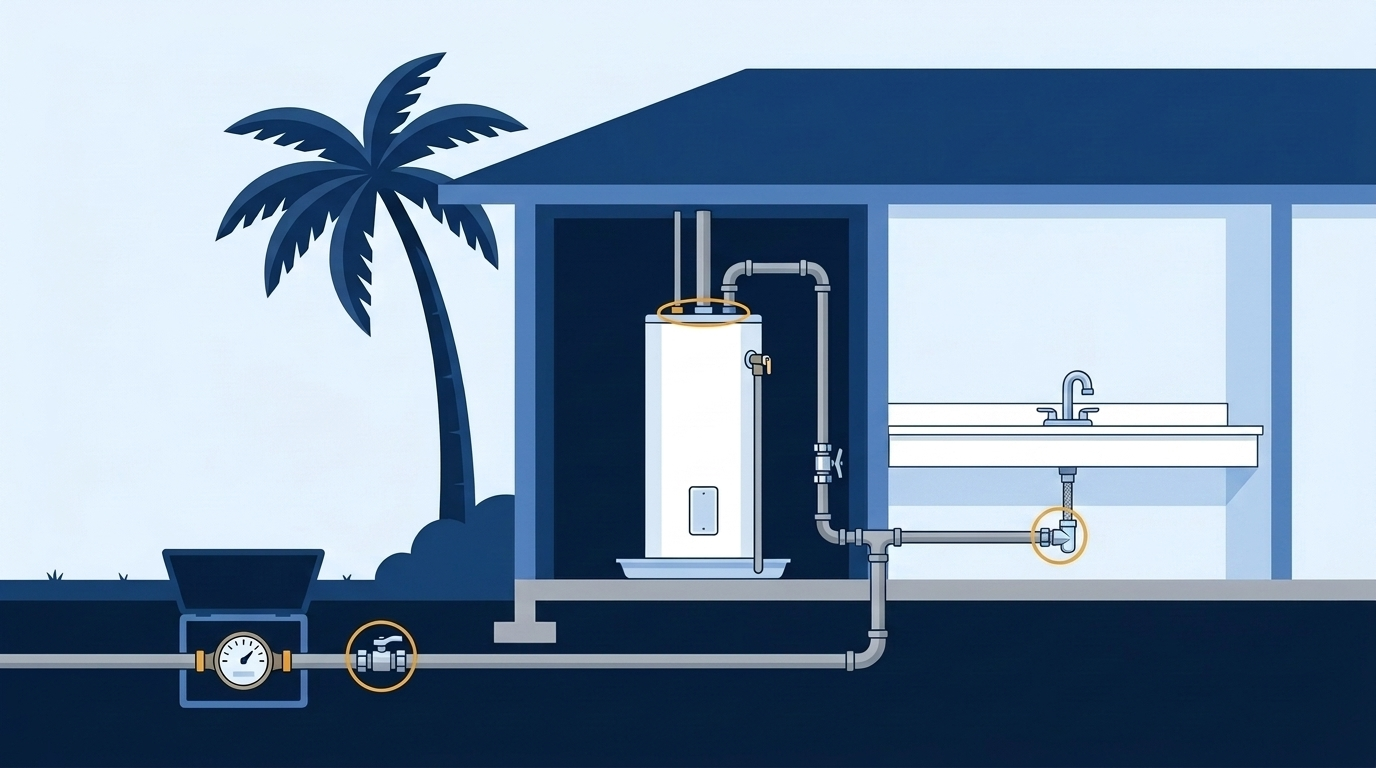
Look wherever pipe comes out of a wall or the ground. In a Port St. Lucie home, that means:
- the pipes coming out of the wall under the kitchen and bathroom sinks
- the supply line behind each toilet
- the pipes at the water heater
- the line at the main water shut-off valve and at the water meter
Those are the spots home inspectors are trained to check. What you are looking for is pipe that is most commonly gray, though it can also be white, silver, black or blue, and that is usually stamped with the code PB2110. Color alone does not settle it: black pipe might be polyethylene, and white pipe might be PVC.
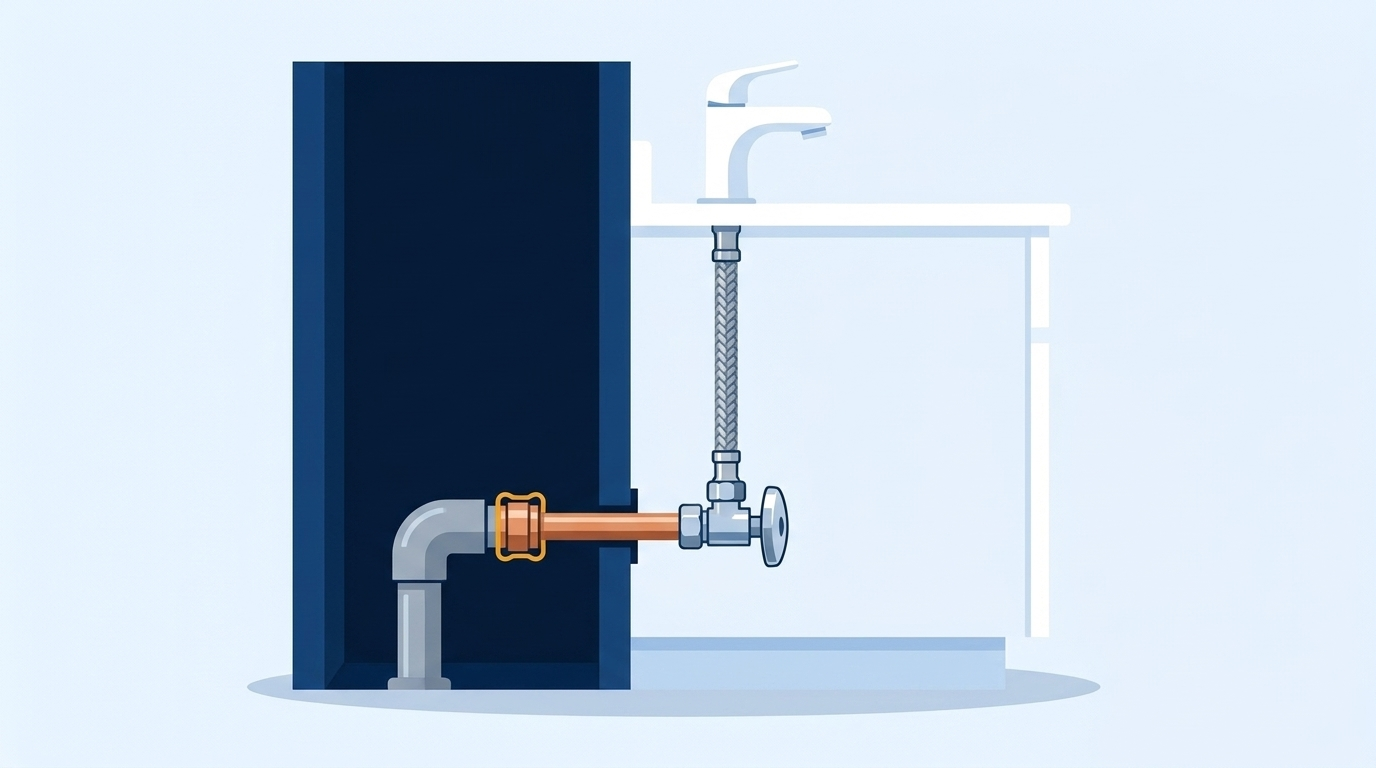
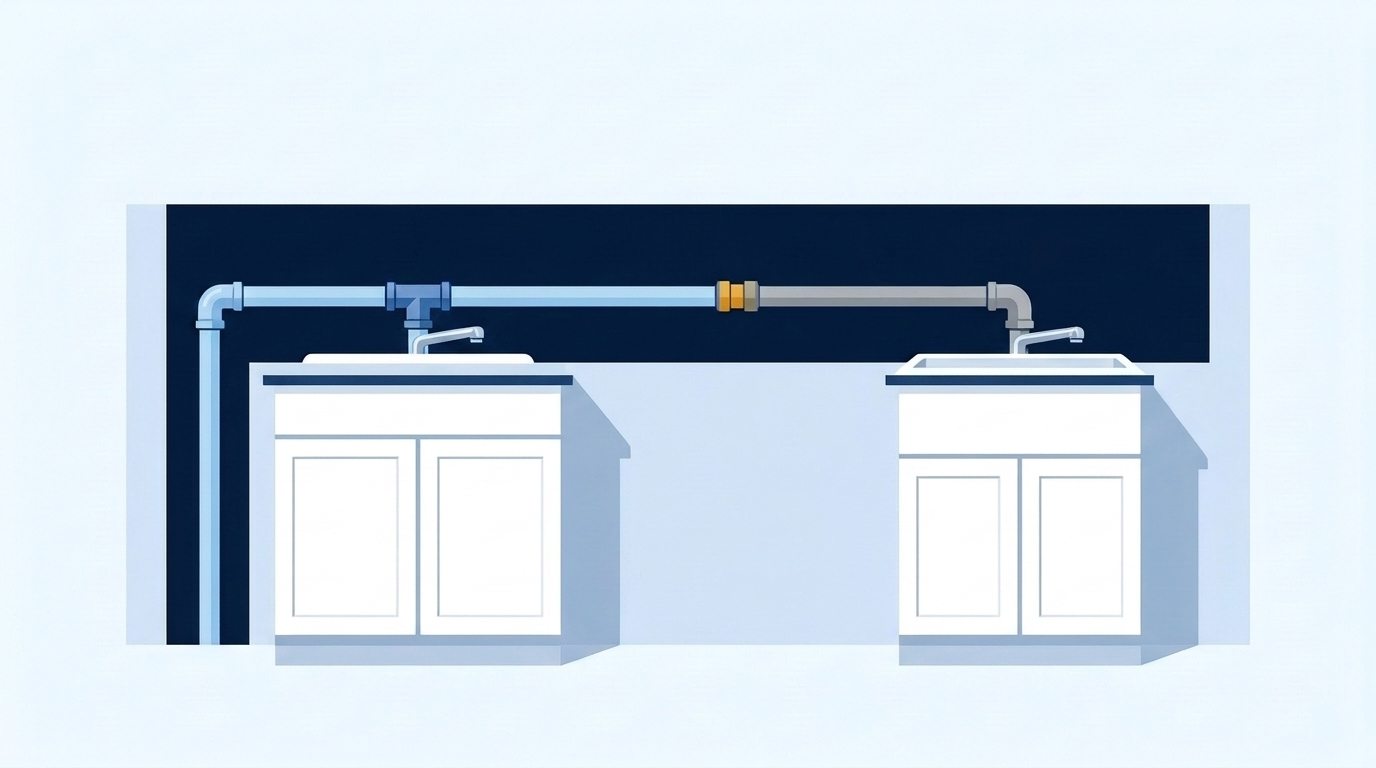
Copper at a fixture does not rule it out, either. Some systems join polybutylene to short copper stub-outs that feed bathroom fixtures. For example, the pipe you see coming out of the wall under a vanity can be copper while the line feeding it from inside the wall is polybutylene.
PEX is a different material. PEX, short for crosslinked polyethylene, is also plastic water pipe, but PEX is crosslinked and polybutylene is not. If the pipe you find is rigid metal, it is not polybutylene at all; our post on low water pressure in older Stuart homes covers telling metal pipes apart.
A color, a stamp and a location narrow it down; a plumber or a home inspector confirms it. Sometimes there is little to see: the pipe can run inside the walls, as in the stub-out example above, so a check has to cover the entire pipe, not just a portion of it. And do not read an old inspection report's silence as a no: home inspectors are not required to note the presence of polybutylene, under the guidance of InterNACHI, the International Association of Certified Home Inspectors.
Why Can Polybutylene Pipes Fail From the Inside in Port St. Lucie Homes?
Because the trouble starts in the material, not on the surface you can see. By the 1980s, some polybutylene systems had premature oxidative, or brittle, failures in drinking-water lines. Many of those failures were attributed to polyacetal, the plastic used to mold the fittings, and some failures of the pipe itself to insufficient resistance to hot chlorinated water.
That is how a polybutylene line can look fine and still fail. Any deterioration happens from within and cannot be detected without turning off the water and dismantling the pipe. So a dry, clean run of gray pipe under your sink tells you little about the inside of the line.
If your water comes from the City of Port St. Lucie, it is disinfected with chloramines, according to the city's 2025 Water Quality Report. Treat that as context, not a cause: we have found nothing that ties chloramines, or Port St. Lucie's water, to a polybutylene leak.
When Do Polybutylene Pipes Make a Home Hard to Insure in Port St. Lucie?
When a new policy is on the table. Citizens' Rule 206.B, listed for its HO-3 and HO-8 homeowners forms in the April 2022 clarification for agents, reads: "New-business risks that are over 20 years old with polybutylene piping are not insurable by Citizens."
Two phrases in that sentence decide whether it reaches your Port St. Lucie home. New business means a new application for a Citizens policy, and the clarification speaks to new business; it does not address policies already in force. Over 20 years old is the easy part: a home that still has its original polybutylene is past 20, since the pipe was used in U.S. plumbing only until the mid-1990s.
For example, when you sell, your buyer's application for coverage is new business, and if that application goes to Citizens, Rule 206.B applies to it.
The question shows up on paper, too. On Citizens' sample four-point inspection form (Insp4pt 03 25), the plumbing section has a list headed "Type of pipes (check all that apply)", and Polybutylene is one of the boxes in it.
Other insurers set their own underwriting rules, so a carrier outside Citizens may answer the question differently. If you are buying a Port St. Lucie home from the polybutylene years, or shopping for a new policy on one, ask that carrier or your agent early how it treats polybutylene.
Should You Replace All the Polybutylene After One Leak in Port St. Lucie?
If insurance is part of the reason you are asking, fixing the leak alone may not change what Citizens looks at. For a new policy on a home over 20 years old, Citizens' Rule 206.B turns on whether the home has polybutylene piping. Its wording does not mention leaks and does not carve out a home where only some polybutylene is left.
A repair still has its place, because it stops the water. What it leaves behind is the rest of the system: the same pipe and the same kind of fittings, in the same walls.
When polybutylene comes out, the code limits what goes in. The Florida Building Code, Residential, the volume that covers detached one- and two-family homes up to three stories tall, lists the materials allowed for water distribution pipe inside a home in Table P2906.5. PEX, copper and CPVC are among them; polybutylene is not. What a full repipe costs here, and how PEX compares with copper, is covered in our post on repipe pricing in Port St. Lucie.
If a sale or a new policy is driving the decision, check with the insurer before you settle the scope of the job. For example, if a buyer's insurer raised the issue, ask that insurer whether replacing only part of the pipe will satisfy it before anyone pays for the work. We do whole-house repiping and work out of Port St. Lucie.
The Bottom Line on Polybutylene Pipes in Port St. Lucie
A Port St. Lucie home whose water lines went in during the polybutylene years could have it, and a look at the pipe is what says whether it does. Check where pipes come out of the walls at sinks and toilets, near the water heater, at the meter and at the main shut-off, and have a plumber or a home inspector confirm what you find. Copper at a fixture does not rule it out, and PEX is a different material.
Polybutylene can fail from the inside, where you cannot see it. Citizens' Rule 206.B makes a home over 20 years old with polybutylene piping not insurable by Citizens as new business, and its wording does not carve out a home where only some polybutylene is left. Other carriers set their own rules, so if a sale or a new policy is in play, ask the insurer before anyone pays for a partial repipe. You can read more about Dream Land Plumbing LLC before you call.