
Why Is There No Hot Water in Your Port St. Lucie Home?
If the hot water in your Port St. Lucie home stopped all at once and your water heater is electric, three failures are worth checking, in this order: a tripped breaker, a tripped high-limit reset button, or a failed heating element or thermostat. The third takes a meter and a technician. This post covers each one, how long reheating takes, and the signs that it is time to stop resetting and book water heater repair. We work out of Port St. Lucie and handle water heater repair and installation across the Treasure Coast.
This post is about hot water that stops. Hot water that has faded over months is a different problem, and our guide to how old your water heater is is the better place to start.
What Usually Fails When a Port St. Lucie Home Has No Hot Water?
A. O. Smith's Use and Care Guide for its residential electric water heaters lists the most likely reasons an electric tank produces no hot water at all. Three of them are below. The guide notes that no power and a burned-out (dry-fired) upper element are both common problems with new installations.
- No power reaching the heater.
- A tripped Energy Cut Off (ECO), the red reset button on the upper thermostat.
- A burned-out upper element, or a broken upper thermostat or its wiring.
The rest of its list is reversed water connections, usually a new-installation problem, and a hot-side plumbing leak that can look like no hot water. If you have found water around the heater itself, start with why a water heater leaks and what to check first instead.
This post follows the electric tank because most Florida homes heat water with electricity: in the U.S. Energy Information Administration's 2020 Residential Energy Consumption Survey, electricity was the main water-heating fuel in 88% of Florida homes. If your heater burns natural gas or propane, its pilot and gas-valve checks are a different job, and that one is a call, not a checklist.
How Can You Tell a Tripped Breaker Stopped the Hot Water?
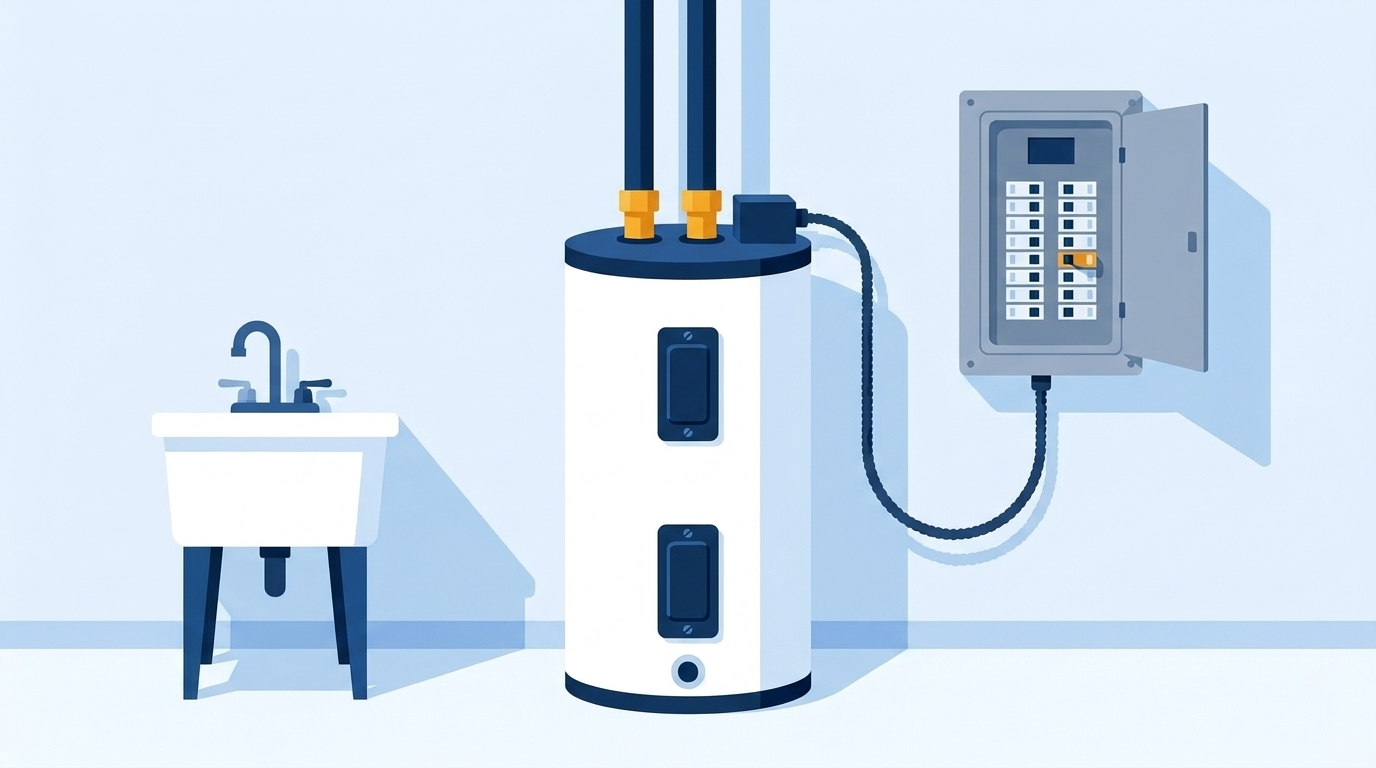
Start at the breaker panel. The Electrical Safety Foundation International (ESFI) notes that water heaters need a 240-volt circuit, which uses both of the home's 120-volt wires. Look for the breaker labeled for the water heater.
If your home has water damage from leaks or flooding, Florida Power & Light (FPL), which serves Port St. Lucie, warns that the water may have come into contact with electrical wiring, and its after-the-storm safety advice sets conditions for resetting breakers: wear dry, rubber-soled shoes, stand on something dry and non-conductive such as wooden furniture, use a dry wooden tool, and never stand in water while operating switches. If you have any doubts about your home's electrical system or are unsure how to proceed, FPL says to call a professional electrician.
ESFI's steps for a tripped breaker are short:
- Unplug or turn off appliances in the room.
- Find your main breaker panel and open the cover.
- Locate the tripped breaker. It will be in the off position or in a middle position between on and off.
- Switch it to off, then back to on. If the problem continues, there may be more serious issues, and an electrician should diagnose it.
If the heater's breaker was fully on all along, move on to the reset button. A. O. Smith's online troubleshooting guide pairs the breaker reset with a check for electrical shorts, loose wires and grounded heating elements.
Why Does Hot Water Stop When Storms Knock Out Power in Port St. Lucie?
An electric tank cannot heat without power, so an outage stops it. When the lights come back and the water stays cold, look in three places.
The breaker. Run ESFI's steps above first.
Half the house's power. FPL's power disturbance FAQ says damaged service leads sometimes leave only 120-volt outlets working, so larger appliances that need 240-volt service, such as water heaters, air conditioning and ovens, may not work until repairs are made; until then, it says, you can check with an electrician or wait for FPL's crews, which repair service leads. If the air conditioning and oven are out too while the lights work, that fits.
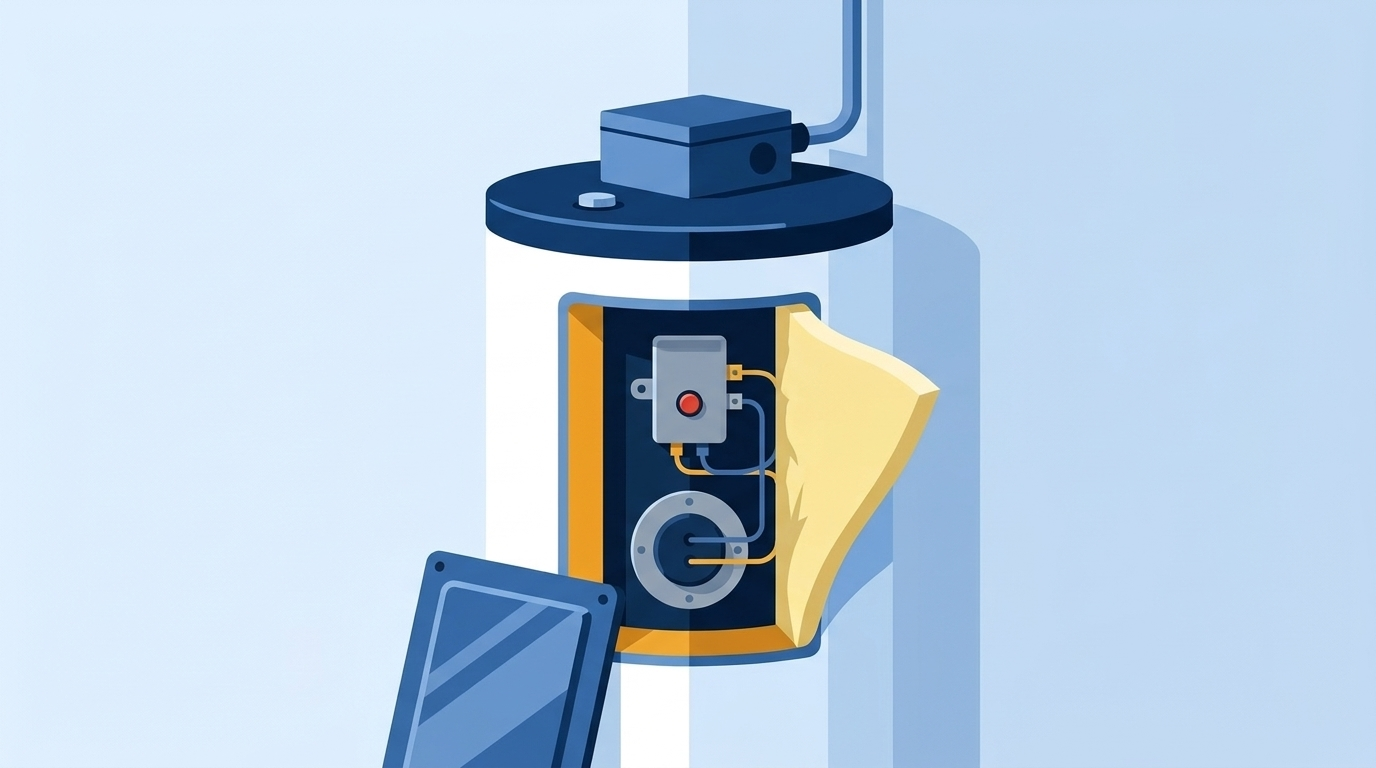
The reset button. Bradford White's installation and operation manual for its electric heaters describes the high-limit control as a manual reset type. A manual reset does not clear itself when the power comes back; someone has to press it. It sits behind the upper access panel.
Do not start the check if floodwater reached the heater, or if its wiring, thermostats or insulation got wet. A. O. Smith's Use and Care Guide says a heater subjected to flood conditions, or whose thermostats have been under water, must be replaced entirely, and that one whose wiring, thermostats or insulation got wet should be shut off immediately and inspected by a qualified person. The guide's check also calls for a non-contact circuit tester; if you do not have one, call for service instead.
A. O. Smith's online guide says to turn off power at the circuit breaker before touching anything, because water heater components remain live even when the unit isn't actively heating, to let the heater cool down completely before removing any panels, and to call a plumber if you're not completely comfortable working on your water heater. The Use and Care Guide then runs the check in this order:
- Turn off the power at the water heater's circuit breaker.
- Confirm it is off: take the cover off the electrical junction box on top of the heater and check the power wires inside with a non-contact circuit tester, because working near an energized circuit can cause severe injury or death from electrical shock.
- Remove the upper access panel and the insulation behind it.
- Press the red ECO reset button. A click means it had tripped.
- Put the insulation, the access panel and the junction box cover back, with every cover secured.
- If it clicked, leave the power off. The guide says the ECO shuts off power to the elements when the tank water gets too hot, that in most cases a trip means the tank overheated because of an element or thermostat problem, and that the power should stay off until a qualified person finds and repairs the cause. If it did not click, the guide sends the upper thermostat to a qualified person.
What Does It Mean When the Reset Button Keeps Tripping in Port St. Lucie Homes?
In most cases, it means the heater keeps overheating. The ECO cuts power to the elements when the tank water gets too hot, and A. O. Smith's Use and Care Guide says not to turn the power back on after a trip until the cause of the overheating has been found and repaired. A button that trips again means that cause was not repaired, or the power went back on before it was.
A. O. Smith's online troubleshooting guide says the high-limit switch can trip because of thermostat issues, often due to a grounded heating element or a faulty lower thermostat, and that repeated tripping indicates serious problems like shorted elements or faulty thermostats.
So the first click is the stop point. Leave the breaker off and call for service.
How Long Before a Port St. Lucie Water Heater Makes Hot Water Again After a Reset?
Once the heater has power again, whether from a reset breaker, a repaired service lead or a repair to the heater itself, the wait depends on its recovery rating and how far the tank has cooled.
Rheem's specification sheet for its Performance electric tanks rates the 50-gallon tall model, with 4,500-watt elements that heat one at a time, at a recovery of 21 gallons per hour at a 90°F temperature rise. At Rheem's rating, a full tank's worth of water climbing the whole 90 degrees takes a little over two hours, and water that cooled less comes back sooner.
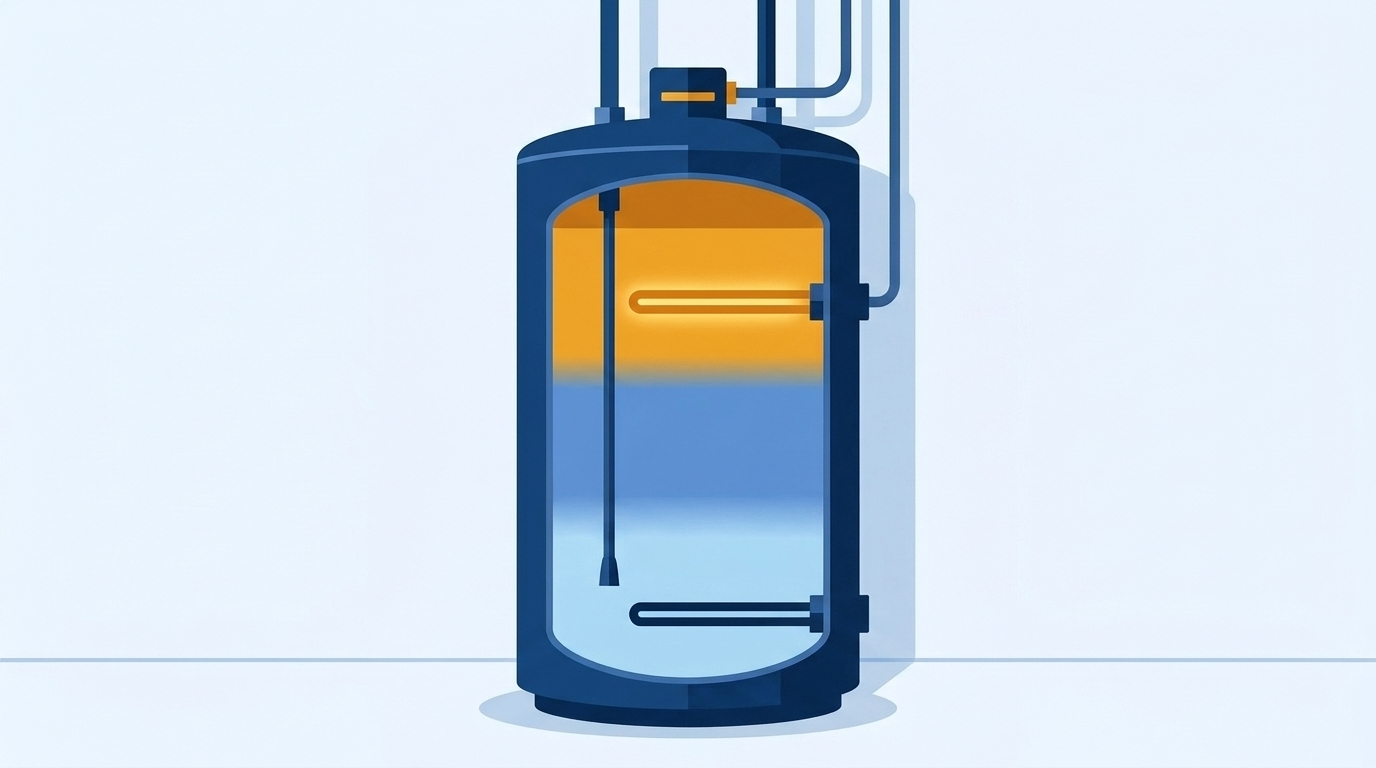
The top of the tank also comes back before the rest. A. O. Smith's residential water heater training manual explains that the upper thermostat first sends power to the upper element until the upper third of the tank reaches its setting, and only then moves power to the lower element.
For your own heater's figures, look up the specification sheet for the model number on its label. If the taps stay cold well past what that rating implies, the repair or breaker reset did not fix the cause.
How Do You Tell a Bad Thermostat From a Bad Element in a Port St. Lucie Home?
Not for certain without a meter, but what you can see from outside the panels narrows it down. A. O. Smith's Use and Care Guide sorts it this way:
- No hot water at all, and the reset did not click. A burned-out upper element leaves you with no hot water; if that element tests good and the ECO had not tripped, the upper thermostat should be checked by a qualified person.
- Some hot water, but not as much as before. If that change was sudden, look to the lower element or, more rarely, the lower thermostat; the lower element does most of the work, so it usually wears out first.
- The reset clicked. That is the overheating case from the storm section.
The guide settles it with test tools: a multimeter reading the element's resistance with the power off and its wires removed, and a non-contact tester on the incoming power wires with the breaker back on. That is live-circuit work, and a job for a technician.
Which Warning Signs Mean You Should Stop Resetting a Port St. Lucie Water Heater?
A reset is a check, not a repair. Stop, leave the heater's breaker off and call for service if any of these shows up:
- The reset button clicks when you press it. That means the ECO had tripped, and the storm section's rule applies: the power stays off until a qualified person finds and repairs the cause.
- The breaker trips again. That is the continuing problem from the breaker section, and an electrician should diagnose it.
- Extremely hot water at the taps, or the tank's relief valve releasing a lot of very hot water. A. O. Smith's Use and Care Guide says a nonfunctioning thermostat or a shorted heating element can cause extremely hot water, that a relief valve releasing large amounts of very hot water is likely a shorted element or, more rarely, a thermostat problem, and to turn the power off until the problem is fixed.
- Water on the wiring, thermostats or insulation. The storm section has the guide's rule: power off, and a qualified person inspects it.
We repair and install water heaters from Port St. Lucie across the Treasure Coast, and we offer plumbing service in Stuart as well. If one of these signs showed up, leave the breaker off and book the repair.
Quick Recap
- With an electric tank, check the heater's breaker, then its reset button if the heater stayed dry and you have a non-contact circuit tester, then have the elements and thermostats checked.
- A tripped breaker sits off or in a middle position; switch it off, then on, and stop if it trips again.
- After a storm, a damaged service lead can leave the water heater, air conditioning and oven dead while the lights work, until it is repaired.
- A click at the reset button means it had tripped, in most cases because the tank overheated; keep the power off until a qualified person finds and repairs the cause.
- Reheat time follows the heater's recovery rating, and the top of the tank comes back first.
- A click at the reset button, extremely hot water, a relief valve releasing a lot of very hot water, or water on the wiring means stop resetting and call.