
How Often Should You Flush a Water Heater in Jensen Beach?
Once a year is the right answer for most Jensen Beach homes. You have probably read that Florida water is hard and that you should be flushing every six months, and for much of the state that is fair advice. It does not describe what comes out of a tap here. Martin County treats and blends its water to a mineral level near the soft end of the scale, so the once-a-year interval Rheem publishes is the one that fits, and the manual that came with your tank has the final word.
That does not make flushing optional. Sediment still collects, it still costs you efficiency, and a tank left a decade without attention is genuinely risky to open. We handle water heater maintenance and repair across the Treasure Coast, and the tanks that give us trouble are rarely the ones on a schedule. They are the ones nobody has touched since installation.
What Sets a Water Heater's Flush Interval in Jensen Beach?
Two things: how mineral-heavy your water is, and how much of it you use.
The general rule is once a year, and every six months if you have hard water. That second clause gets quoted at Florida homeowners constantly, usually by somebody selling a softener. Worth checking whether it applies to you.
For Jensen Beach homes billed by Martin County Utilities, it does not. A Hutchinson Island South address that Fort Pierce Utilities Authority bills is on a different supply, and so is a private well. Martin County Utilities runs the North Water Treatment Plant right here in Jensen Beach, and in May 2022 its laboratory reported a finished-water sample at 68 mg/L total hardness in a water quality comparison presented to the county commission. On the classification the U.S. Geological Survey uses, 0 to 60 mg/L is soft and 61 to 120 is moderately hard. Our water lands eight milligrams into the moderately hard band, well below the 121 mg/L mark where water is called hard at all.
That is engineering, not geology. The county treats the deeper, more mineralized Floridan water by reverse osmosis, then blends it back with surficial water. In its own annual water quality report, reverse osmosis leaves water "relatively free of desirable minerals," so the blend exists to put stability back. The low number follows from that blend, not from the geology.
So annual is your baseline. Move it earlier if your household cycles the tank hard, if you see sediment when you drain it, or if you are on a private well, which is a different supply.
Which Water Heater Symptoms Call for a Flush, Not a Replacement?
This is where the wrong fix gets chosen, because the two symptom sets overlap just enough to be confusing.
Symptoms that point at sediment, which a flush can genuinely fix:
- Rumbling, popping or knocking from the tank as it heats
- Running out of hot water sooner, or taking longer to recover between showers
- Energy use creeping up with no change in habits
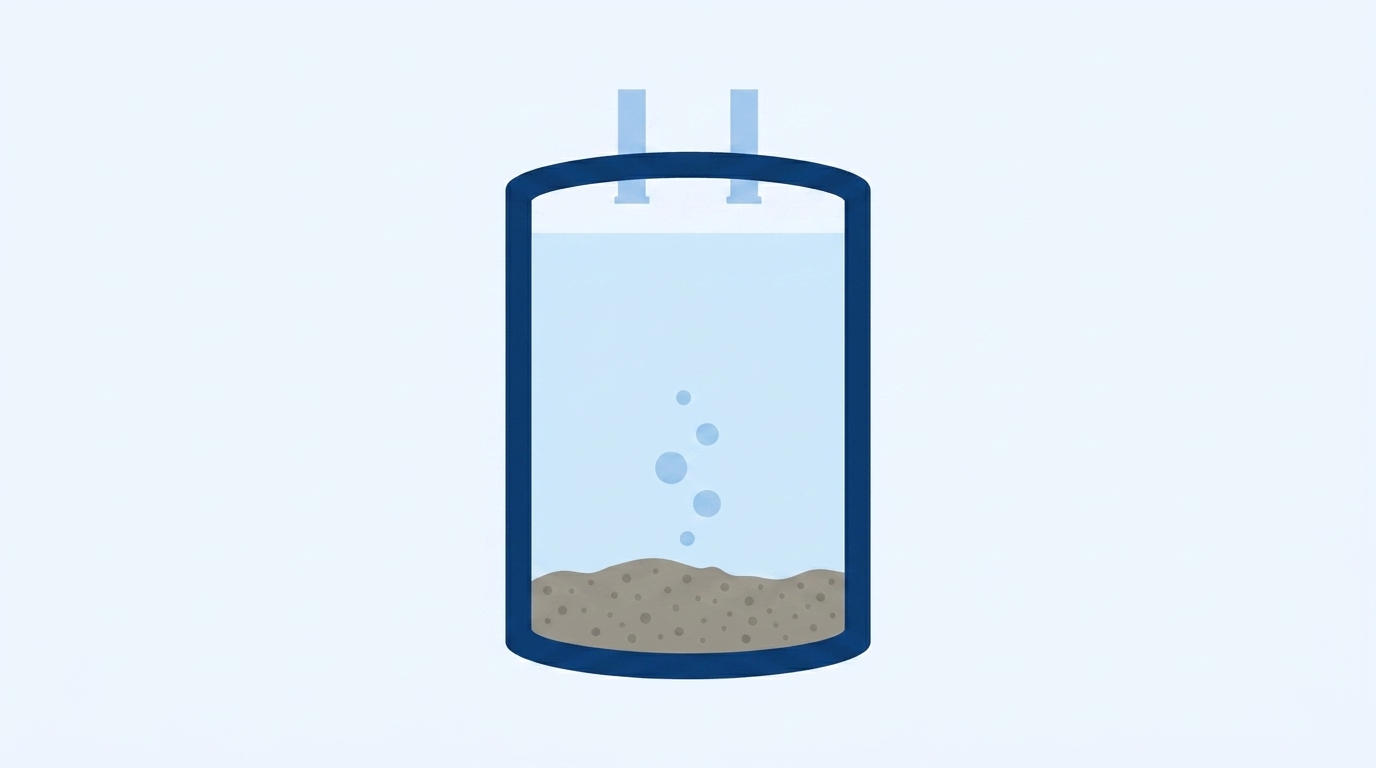
The noise is the clearest of them. Sediment settles into a layer at the bottom of the tank and traps water underneath it against the burner or element. That water boils and forces its way out, and the knocking is the sound of it doing so. Flush the sediment out and the noise often goes with it.
Capacity is the ambiguous one. Running out sooner can mean sediment occupying room the tank needs, but a worn element does the same thing, so treat a flush as the test rather than the answer.
Symptoms that point at age instead, which a flush will not touch:
- Rusty or discolored hot water
- Damp patches or corrosion at the base of the tank
- A unit well past the service life its manufacturer expects
The distinction matters because sediment noise gets read as a death rattle, and a tank needing one afternoon of attention gets replaced instead. If your symptoms are on the second list, answer the age question first: our guide to working out how old your water heater is covers decoding the label and whether replacement is the right call.
One symptom belongs to neither list. A smell confined to your hot water only is its own diagnostic, and neither flushing nor age explains it. Have us look at the water heater rather than guessing at it.
How Do You Flush a Tank Water Heater Step by Step in Jensen Beach?
The procedure is the same in every city, and the sequence is what keeps it safe.
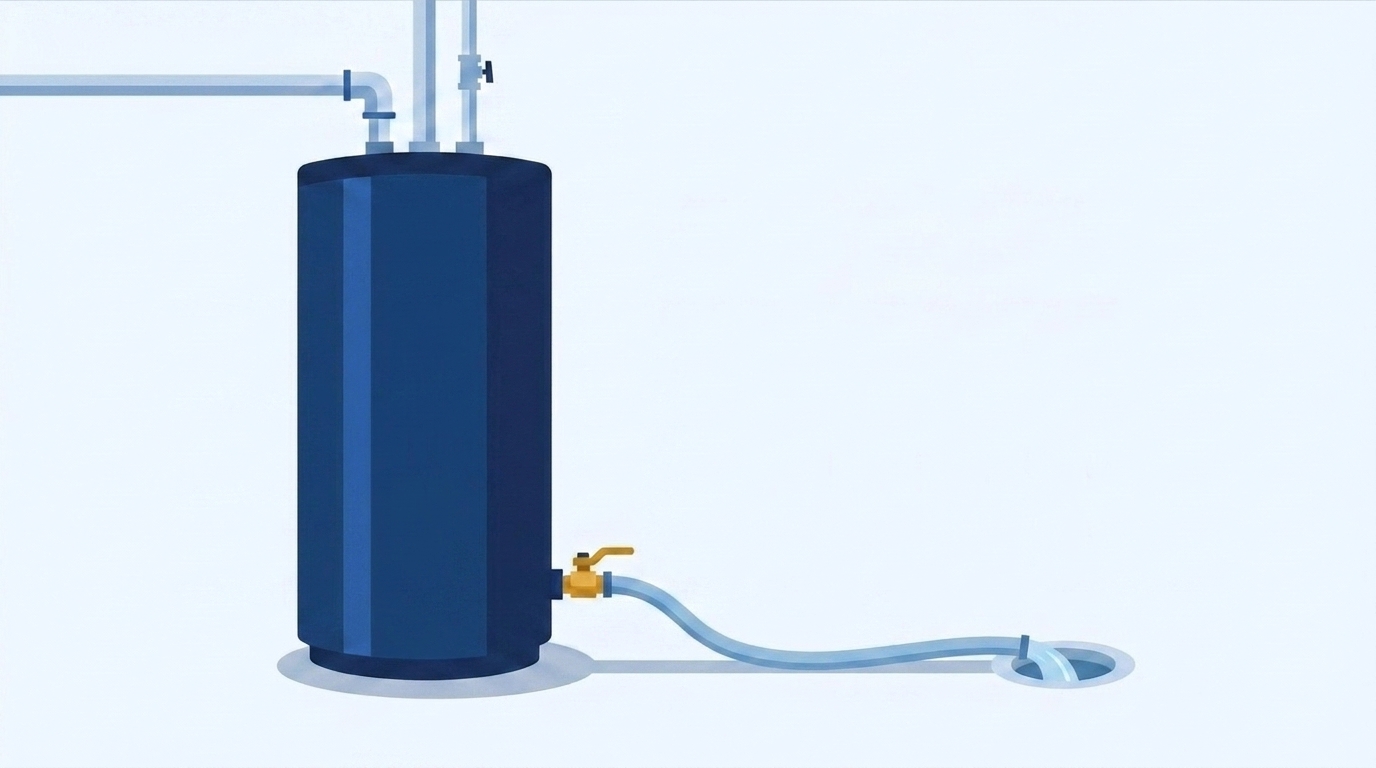
- Shut down the heat. Kill the breaker on an electric unit. On a gas unit, turn the gas valve to its off or pilot setting. Then let the tank cool before anything else: give it a few hours with the heat off, or run a hot tap until the water comes out cool while the cold supply is still open, because 40 to 50 gallons at tank temperature is a scald risk wherever the hose ends. Draining while the burner or element can still fire is how elements burn out and people get hurt.
- Shut the cold water inlet, on the pipe entering the top of the tank.
- Connect a hose to the drain valve and run the other end somewhere that can take a large volume of still-hot water. A driveway or floor drain works. A flower bed does not.
- Open a hot tap in the house to break the vacuum. The tank will not drain properly without it.
- Open the drain valve and let it run out completely. What comes out first is usually cloudy or gritty. Keep going until it runs clear.
- Close the drain valve, disconnect the hose, and refill. Open the cold inlet, leave the hot taps open, and wait until water runs steadily before closing them. Only then restore power or the gas valve.
Municipal utilities publish the same sequence; the City of Blaine's guidance is a clear second read. Budget a few hours, most of them waiting for the tank to cool and drain.
At the annual interval that suits our water, this is manageable for most homeowners.
What Makes Flushing a Neglected Tank Risky for a Jensen Beach Homeowner?
A tank flushed every year drains like a bathtub. One never flushed is a different object, and opening it is a decision rather than a chore.
Sediment does not always stay loose. In an older tank, or one that has not been flushed in a while, it may harden into a bed that is difficult to remove without specialized tools, and flushing that tank yourself could lead to leaks or further damage.
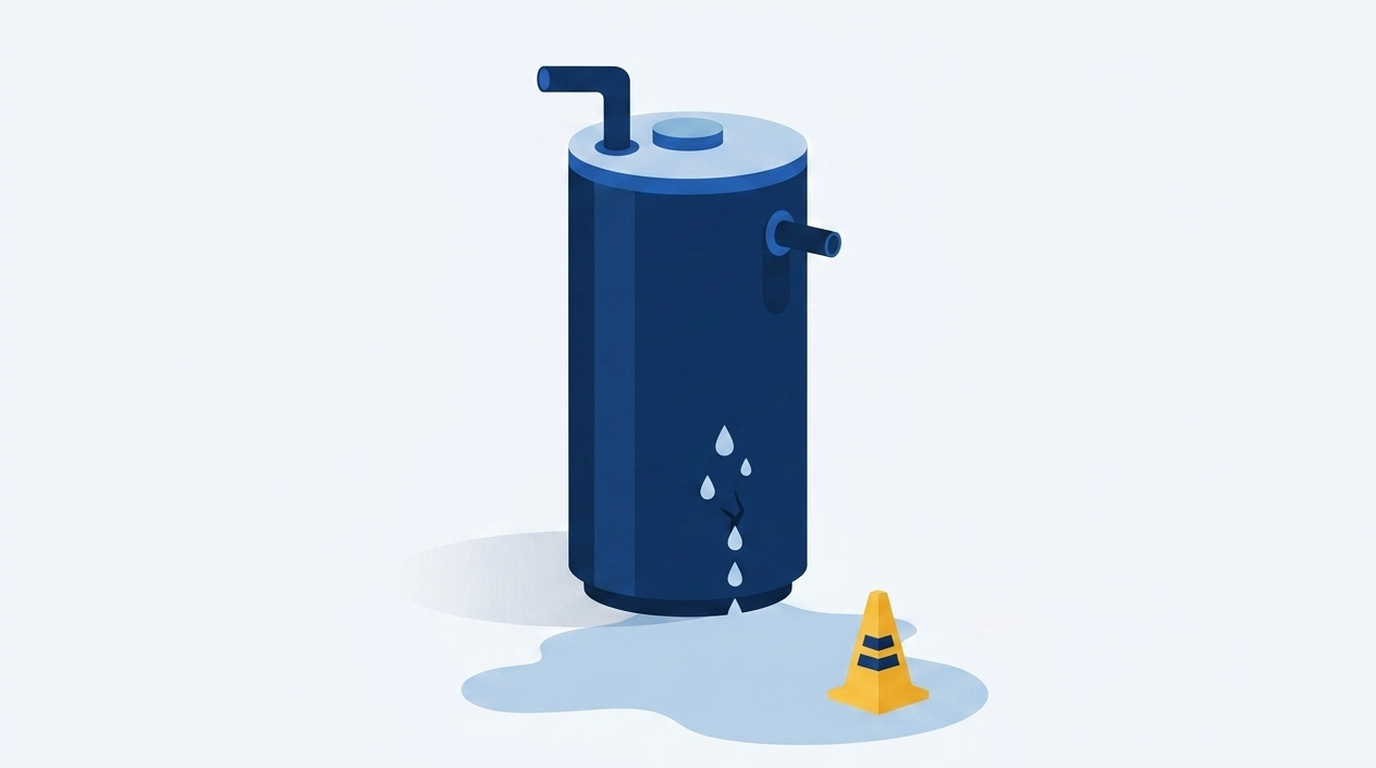
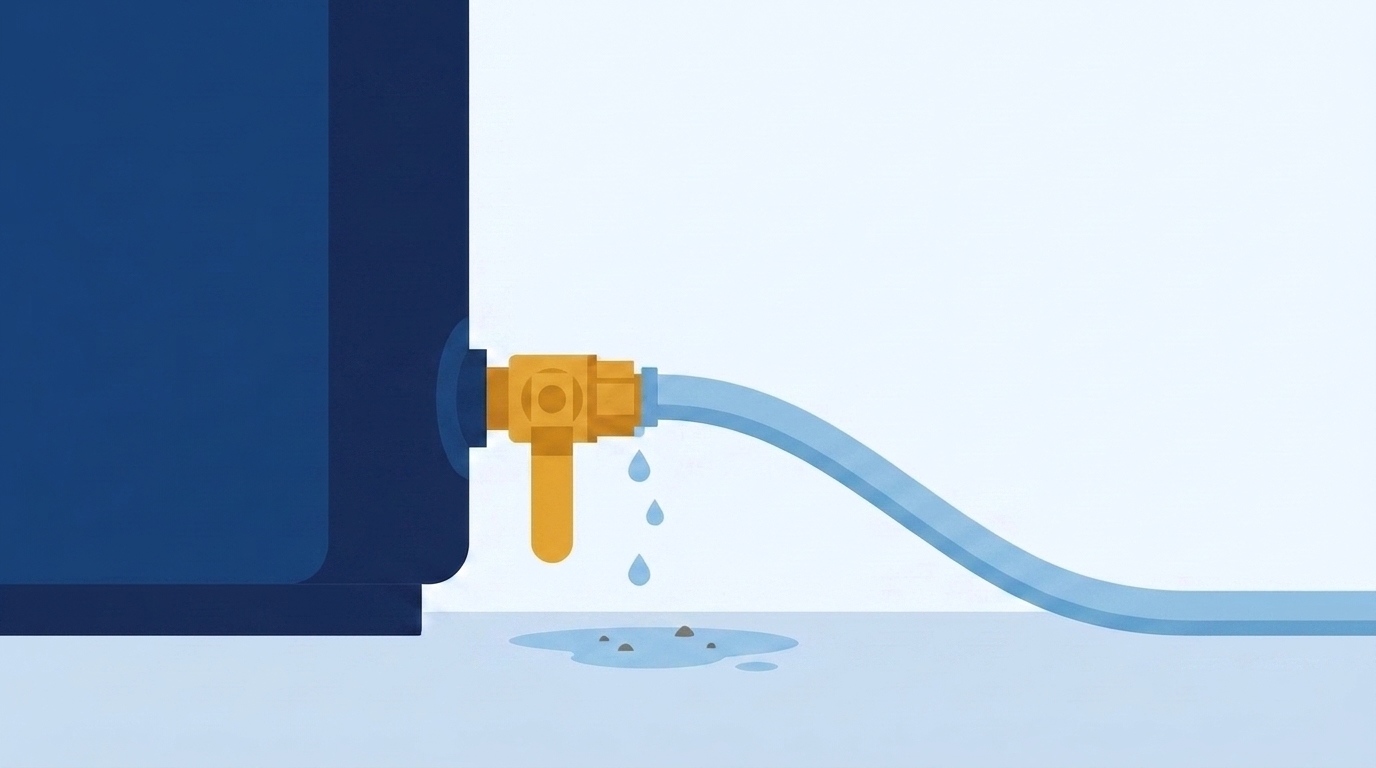
The failure that catches people out is more specific, and worth knowing before you touch the valve. On a tank that has not been drained or flushed recently, the drain valve can rust and become difficult to close completely once it is opened, which can lead to a leak and water damage. Sediment can also keep a drain valve from sealing.
So be honest about what you are opening. If the tank is 8 to 12 years old or older, or has not been flushed in a while, consider professional help. Our rule is simpler: if you do not know when it was last done, have someone do it who arrives with a replacement valve on the truck. A flush that goes wrong on a neglected tank becomes an emergency fast.
What If the Drain Valve Will Not Close After a Flush in a Jensen Beach Home?
If it happens, do these things in this order, and do not force the handle.
Leave the hose connected and pointed somewhere safe. Your instinct is to pull it off, and that turns a controlled drain into an uncontrolled one.
Then work the valve rather than force it. Forcing a stiff valve risks breaking it outright, which removes the option of closing it at all. Instead, open and close it a few times in case sediment is blocking it.
If it still leaks, close the cold water inlet, which stops the tank refilling as fast as it empties. A tank draining but not refilling is a nuisance. A tank doing both at once is a flood. A threaded hose cap screwed onto the valve can stop the leak until the valve is replaced.
At that point it is a call, not a project.
Worth separating: this is a valve that will not reseat after a flush. If yours has been weeping on its own with no flush involved, that is a different diagnosis, and our post on what makes a water heater leak sorts the causes out.
Which Parts of a Water Heater Does a Jensen Beach Pro Check on a Flush?
"Why call someone for something I can do with a garden hose?" Because draining is the least valuable part of the visit. Around it sits an inspection a hose cannot perform:
- The temperature and pressure valve. The tank's actual safety device, tested rather than glanced at.
- The drain valve and its seat. Checked for whether it will still seal, catching the failure above before it happens.
- The anode rod. A sacrificial metal rod that corrodes so the tank lining does not. When it is gone, the tank starts consuming itself. No garden-hose flush touches it, and it is the component most responsible for how long the tank lasts.
- System pressure. Measured, because pressure that runs too high shortens the life of everything downstream, not only the heater.
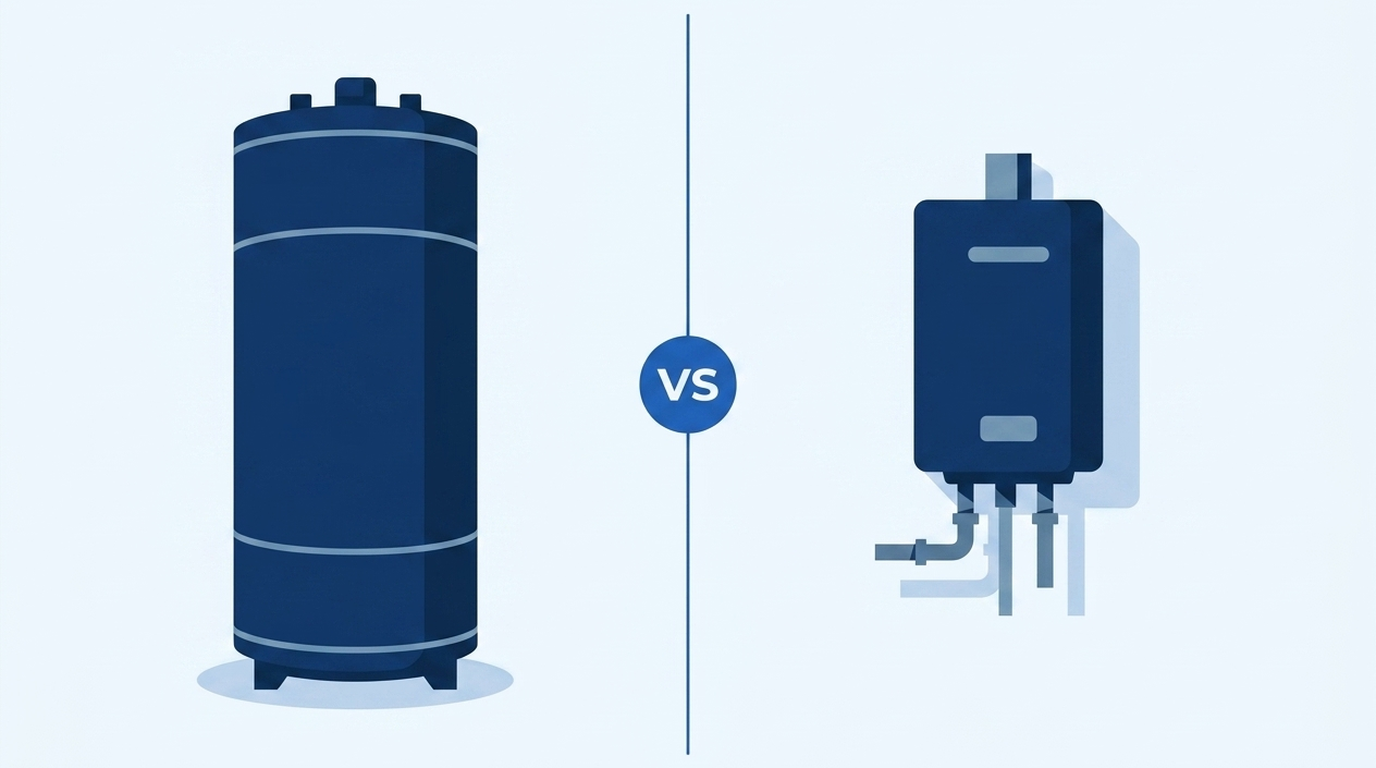
The anode rod is the one worth attention. You can flush a tank perfectly for a decade and still lose it early to a rod nobody checked. That inspection is what we bring to water heater work across the area, including plumbing service in Port St. Lucie. Tankless units sit outside all of it: they need descaling rather than flushing, which our comparison of tank and tankless systems covers.
When Does Flushing Stop Helping a Water Heater in Jensen Beach?
There is a point where the maintenance stops earning its keep, worth recognizing rather than flushing on autopilot.
If a tank is well into the back half of its service life and has been flushed regularly all along, keep going. The routine is doing what it should.
If a tank is that old and has never been flushed, the calculation inverts. The sediment bed is hardened, the drain valve is an unknown, and the upside of clearing a tank near the end anyway is small next to the chance of turning a working heater into a failed one. Usually the right move is to leave it alone.
And if the noise continues after a proper flush, flushing was not the answer. That points at scale fused to the element, or at a tank far enough gone that sediment is not the real story. Either way the next question is the unit's remaining life rather than its maintenance schedule, and our water heater age guide is built to answer it.
The Bottom Line on Water Heater Flushing in Jensen Beach
Flush once a year on Martin County Utilities water. The six-month advice is written for genuinely hard water, and at 68 mg/L in the county's 2022 sample the blend does not qualify, whatever the softener salesman told you. If your manual says six months regardless of water, as A. O. Smith's do, that is your paperwork and your call. On a private well, judge it by what comes out.
Sort the symptoms before you act. Rumbling, slow recovery and creeping energy use are sediment, and a flush fixes them. Rusty water and damp at the base are age, and it will not.
Be careful with a tank nobody has flushed in years. It is the one job here where doing it yourself can end worse than doing nothing.
If you are not sure which situation you are in, talk to us about your water heater and describe what it is doing. Usually we can say over the phone whether it is a flush, a part, or a replacement conversation.